Confirm

DOOH LED Displays: What Determines ROI for Advertisers

24.01.2026

Advertisers buy outcomes, not screens. Yet DOOH LED displays are often evaluated like hardware purchases: pixel pitch, nits, a headline “lifetime” number, then a price per face. That approach misses where ROI is actually made or lost. In real campaigns, ROI depends on whether the right people had a realistic chance to see the message, how consistently it played, how well the creative matched the moment, and how confidently results can be measured and optimized.

The biggest misconception is that more brightness or more resolution automatically increases performance. In practice, DOOH ROI is a system problem: location, audience measurement, share of voice, uptime, content strategy, and attribution discipline. By the end of this article, the reader will understand the practical levers that determine ROI for advertisers using DOOH LED displays, and how to avoid the most common missteps.
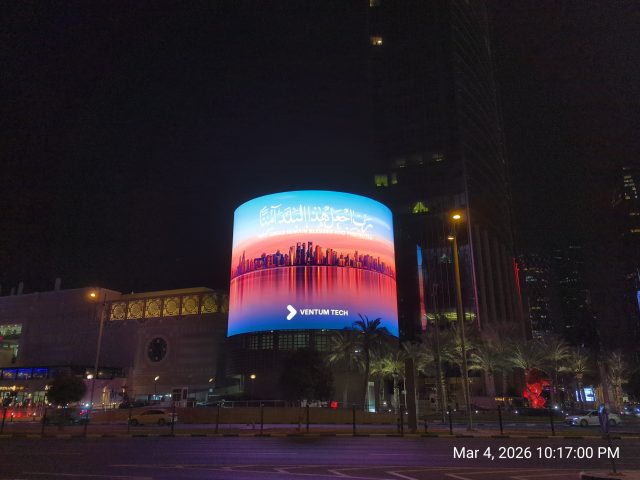
Infiled

Photo Credit © Ventum Tech

The buyer challenge in DOOH is not “can it display an ad”

Most advertisers and agencies are balancing three pressures at once: performance accountability, brand safety, and rising expectations for targeting. DOOH LED displays can satisfy all three, but only when the buy is structured correctly.

The challenge is that DOOH inventory is not standardized in the way many digital buyers expect. Exposure is shaped by dwell time, viewing angles, traffic speed, occlusion, ambient light, and loop dynamics. Two screens with the same weekly “impressions” can perform differently if one is visible for 6 seconds in slow traffic and the other is glimpsed for 1.5 seconds at speed.

Measurement standards exist, but buyers do not always insist on them. Industry bodies like the IAB have published a DOOH measurement guide to bring consistency to how DOOH performance is evaluated, including how data is collected and how outcomes are compared across buys. At the same time, the Media Rating Council (MRC) has published standards that emphasize concepts such as dwell time and exposure zones for out-of-home measurement.

For advertisers, the practical issue is simple: ROI depends on buying exposure that is both real and comparable, then ensuring the media actually delivers it consistently.

The mechanics that determine ROI on DOOH LED displays

If ROI is the output, these are the inputs that most reliably shape it. The common theme is that they translate a “screen” into a repeatable media product.

Audience quality, not just audience quantity

Advertisers care about reaching the right people at the right time, not only hitting a big impression number. In DOOH LED displays, audience quality depends on the location’s audience mix, the time of day, and the travel behavior around the unit. This is why planning and post-buy analysis often reference standardized audience metrics such as reach and frequency, not only gross impressions.

In the U.S., Geopath is a widely used audience measurement organization for OOH, providing unit-level data and methodology for estimating impressions, reach, and frequency. Whether or not a buyer uses Geopath specifically, the ROI principle holds: if the audience model does not fit the campaign goal, ROI will be constrained even if the screen is technically excellent.

Viewability and dwell time, the invisible ROI multipliers

A DOOH LED display can be “premium” but still underdeliver if real-world viewability is weak. This is where DOOH differs from many digital channels. A placement with high traffic counts can still be a poor buy if the screen is frequently blocked, angled away, or visible for too short a time to process the message.

Standards and guidelines emphasize dwell time and exposure zones because they shape the probability that an ad could be seen. The MRC’s work highlights dwell time as a core input to impression concepts in OOH measurement.

For ROI, the practical question is not “How many impressions?” It is “How many meaningful opportunities to see, at a duration and angle that supports the creative?”

Share of voice, loop length, and spot duration

Many buyers underestimate how operational scheduling affects results. In DOOH LED displays, ad delivery is shaped by:

  • Spot duration (often 6–15 seconds)
  • Loop length (total time before the ad repeats)
  • Share of voice (how many advertisers are in the loop)
  • Dayparting (when the ad is eligible to play)

A great location can become a weak performer if the loop is long and frequency is insufficient to build memory. Conversely, a less iconic location can outperform when the schedule produces consistent repetition during peak relevance windows.

This is also where “CPM” comparisons can mislead. A lower CPM does not guarantee better ROI if frequency is too low to drive recall or action.

Proof of play and operational delivery integrity

Unlike many online channels, DOOH has a physical delivery component that can fail in obvious ways: screen outages, brightness derating, content playback errors, network interruptions, or partial module failure that reduces legibility. If the display is not consistently delivering spots as scheduled, ROI erodes even if the plan looked strong.

This is where engineering and operations directly affect advertiser outcomes. Displays with better thermal behavior, power stability, and serviceability tend to maintain higher uptime and more consistent luminance and color performance over time, which protects delivery. INFiLED generally frames this as “media reliability”: if a network cannot consistently deliver proof-of-play at the intended brightness in real outdoor conditions, the media product is weaker than its rate card suggests.

Creative that matches the environment, not the boardroom

The best DOOH LED displays do not rescue weak creative. Outdoor viewing conditions compress attention and time. ROI improves when creative is designed for fast comprehension, high contrast, and minimal cognitive load.

Practical creative constraints that show up in real performance:

  • Legibility at distance and speed
  • High contrast relative to ambient light and glare
  • Simple message hierarchy (one main message)
  • Branding that is recognizable in under 2 seconds
  • Context-aware messaging when dayparting or triggers are used

Even hardware decisions feed this. Brightness (nits), contrast, and calibration consistency affect whether a creative remains readable in sun, haze, and nighttime glare conditions.

Long-term value is delivered by consistency, not peak specs

Advertisers and operators often focus on campaign results week-to-week, but ROI for DOOH LED displays also depends on how performance holds across months and years.

Uptime and maintenance predict revenue stability

If a screen is down, impressions do not accrue. If it is degraded, campaigns may technically “run” but underperform due to reduced readability. The operational costs of service visits, traffic control, and downtime can be as important as the original capex decision.

This is why long-term value in DOOH LED displays is tied to maintainability: front access, modular replacement strategy, predictable calibration workflows, and a realistic spare parts plan. If maintenance is slow and expensive, the network’s effective inventory shrinks and ROI falls for both operator and advertiser.

Brightness management and compliance without sacrificing performance

Outdoor installations often face brightness limits, community concerns, and power constraints. A display that can maintain usable contrast at lower brightness, and avoid aggressive overdriving that accelerates wear, tends to remain more consistent over its lifecycle. The ROI impact is subtle but real: fewer service events, more stable appearance, and fewer campaign disputes about “it didn’t look like the proof.”

Measurement confidence enables optimization, which enables ROI

Advertisers pay more for media they can optimize. The ability to plan, measure, and attribute results consistently increases budget confidence and repeat spend. This is why industry efforts to standardize DOOH measurement matter to ROI, not as a compliance checkbox but as a buying unlock. The IAB’s guide explicitly focuses on aligning buyers and sellers on shared frameworks for evaluating DOOH performance. 

For post-campaign learning, third-party measurement and brand lift approaches can help advertisers understand impact beyond clicks. Nielsen, for example, discusses approaches to measuring out-of-home impact using brand metrics and cross-channel analysis.

Common mistakes that quietly destroy DOOH ROI

Mistake 1: Buying a screen, not a delivery system

A display is only one layer. ROI depends on CMS stability, network connectivity, proof-of-play reporting, and service readiness. If any layer is weak, campaigns lose consistency.

Decision guidance: require clear reporting on delivery, uptime expectations, and response times. Treat the network like infrastructure.

Mistake 2: Chasing maximum nits instead of usable visibility

Very high brightness can help in full sun, but it also raises thermal stress and operating cost. If the creative is not designed for outdoor legibility, extra nits often do less than expected.

Decision guidance: balance brightness with contrast, calibration, and creative standards. Specify “readability under real ambient conditions” rather than only peak brightness.

Mistake 3: Ignoring loop economics

A long loop and low share of voice can collapse frequency, which collapses recall and response. ROI then looks worse than expected, and the placement gets blamed.

Decision guidance: model frequency using loop length, spot duration, and dayparting. Buy enough presence to be remembered.

Mistake 4: Treating impressions as universally comparable

Impressions in DOOH are modeled, and methodologies differ. Standards and methodological transparency matter when comparing networks.

Decision guidance: insist on measurement disclosure and alignment with recognized standards. Geopath’s documentation is an example of the kind of methodological transparency buyers should expect from a measurement provider.

Mistake 5: Forcing digital attribution logic onto every DOOH objective

Not every campaign is built for direct response. Some are built for reach, perception, and incremental lift. When buyers demand only click-like attribution, they often underinvest in creative and frequency, then misread results.

Decision guidance: align measurement to the objective. Use brand lift and cross-channel correlation where appropriate, and reserve direct attribution for campaigns designed for it.

Practical takeaways advertisers can apply to DOOH LED displays:

Define the outcome first: reach, frequency, foot traffic, brand lift, or direct response.

Validate viewability and dwell time, not only impressions.

Model loop dynamics to ensure sufficient repetition during relevant dayparts.

Require proof-of-play and delivery reporting, and understand uptime expectations.

Design creative for the environment: legibility, contrast, and fast comprehension.

Choose partners who can explain measurement methods and align to standards like IAB and MRC guidance.

ROI for advertisers using DOOH LED displays is determined less by a single hardware spec and more by exposure quality, delivery integrity, and measurement confidence. The most profitable buys combine strong viewability and dwell time with a schedule that builds frequency, creative designed for real outdoor attention limits, and proof-of-play discipline that ensures campaigns actually run as planned. Over time, the network’s engineering and operations become part of ROI because uptime, brightness stability, and serviceability protect consistent delivery across seasons and years. INFiLED’s engineering-led view of DOOH is that the display should be evaluated as part of a media system, where reliability and consistency are performance features. When buyers treat DOOH LED displays as infrastructure with measurable delivery and repeatable exposure, ROI becomes predictable rather than hopeful.

User registration
Join us to download our content. It only takes a moment!

    I have read and accept the privacy policy

    This site is protected by reCAPTCHA and Google.

    It looks like you are visiting the website from
    Select your region: