Confirm

Hotel Lobbies and LED: Why Hospitality Brands Are Replacing Static Art Walls with Fine-Pitch Screens

27.08.2026

Walk into a newly renovated hotel lobby today and there is a good chance the artwork on the feature wall is not static at all. Hospitality brands have been quietly replacing framed art, printed murals and static branding walls with fine-pitch LED screens, and the shift is easy to miss because the best installations are not trying to look like a screen at all.

The common misconception is that this is a broadcast-style digital signage trend, another way to run ads or wayfinding in a lobby. It generally is not. The driver is design, not messaging. Brands want a lobby that can change with the season, an event, or a guest segment without a renovation budget every time the aesthetic needs to move on. By the end of this article, hospitality design and facilities teams will understand what actually separates a good lobby LED installation from an oversized television bolted to a feature wall.
What Fine-Pitch LED Actually Means in a Lobby Context

Pixel pitch refers to the spacing between individual LED clusters, and in a hospitality setting it is the single spec that determines whether a screen reads as art or as equipment. At close viewing distances, which is exactly what a lobby feature wall gets from guests walking past it or waiting at a check-in desk, a coarse pixel pitch is unforgiving. Anything much above two millimeters tends to reveal its individual pixels up close, breaking the illusion the design team was after.

Brightness matters differently here than in most commercial LED applications too. A lobby is rarely fighting daylight the way a retail storefront is, so displays calibrated for indoor ambient light, rather than outdoor peak brightness, look more natural and cost less to run over their lifespan.

Color accuracy and consistent calibration across the panel are what keep a curated art piece looking intentional rather than patchy, which is a harder bar to clear than most buyers expect walking in, especially once a panel has been running content for a year or more and needs to still match the rest of the wall.

How Hotels Are Actually Deploying These Screens

The installations driving this shift tend to fall into two camps.

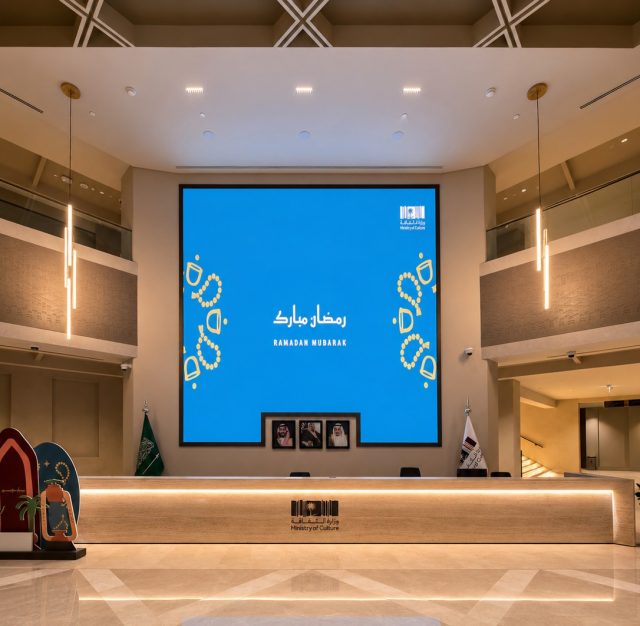
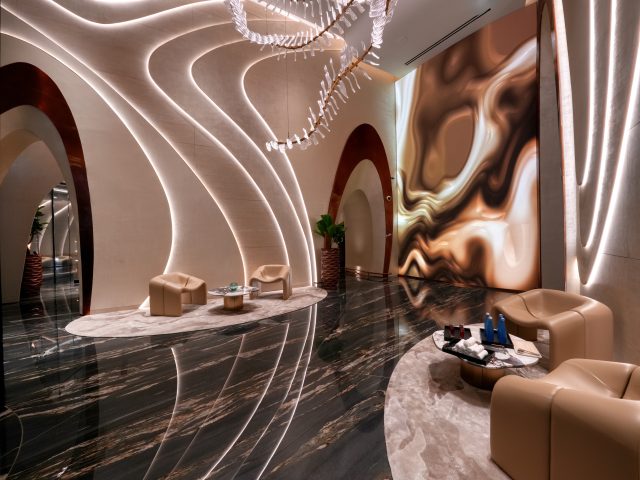
The first is the architectural feature wall, a thin display built into or flush against an existing wall, running curated visual art, branded content or slow-moving ambient scenes that change by time of day or season.

The second is the retrofit, where a hotel group wants the same effect inside an existing lobby without a structural renovation, which means weight and mounting complexity become the limiting factor as much as image quality.

This is where a lot of hospitality projects run into trouble. A display specified like a corporate boardroom wall, thick, heavy and built for a purpose-designed recess, does not fit cleanly into a lobby that was built around a fireplace, a piece of stone cladding, or a load limit the original architect never planned around.

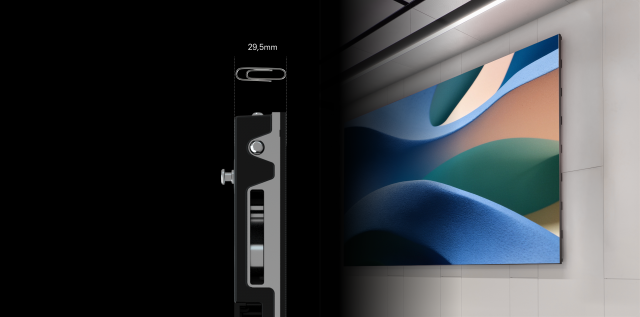
Thin-profile panels built for architectural integration, the kind of approach behind INFiLED’s WP Series, solve the first problem. Lighter cabinet weight, closer to what the WK Series offers, solves the second, particularly in a retrofit where the existing structure was never designed to carry display equipment.


Infiled

WP Series is a wallpaper-thin LED display engineered for spaces like hotel lobby where architectural integration is critical.

What This Means for Hospitality Design and Facilities Teams

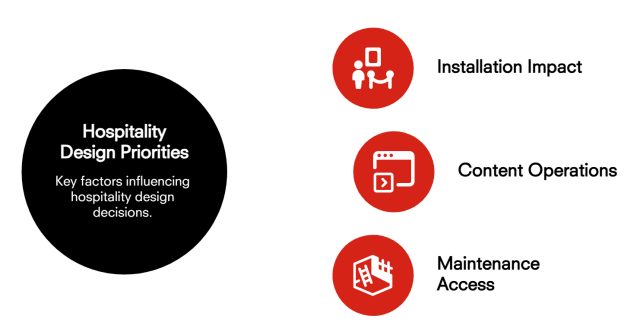
For a hospitality brand evaluating this for the first time, the decision usually comes down to three things beyond image quality: installation impact, ongoing content operations and maintenance access.

Infiled

Installation impact is about whether the display can go into an existing lobby without a full renovation, which is where cabinet weight and depth do more work than any single spec sheet metric.

Content operations is often underestimated. A lobby screen that only ever plays one static loop has effectively become an expensive art print, and the brands getting real value are the ones treating it as a content channel that changes with events, seasons or local partnerships.

Maintenance access matters because a lobby is a public, high-traffic space, and a panel that requires rear access for service is a much bigger disruption than one that can be serviced from the front during off-peak hours.

The same logic that applies to lobbies is starting to show up in adjacent hospitality spaces too, from restaurant menu boards to back-of-house branding walls, though the specification priorities shift again once digital menus, food photography and higher ambient light enter the picture.

Lobby Screens Versus Corporate Reception Walls

It is worth separating hotel lobby installations from the corporate reception walls they superficially resemble, because the buying logic is not identical.

Corporate lobbies are judged primarily on first-impression return on investment, a single visitor’s first ninety seconds in the building. Hotel lobbies are judged over repeat visits, sometimes hundreds of them from the same guest across a loyalty relationship, which puts more weight on content variety and less on any single dramatic reveal moment. In

INFiLED’s experience supplying both corporate and hospitality projects, a hospitality brand that treats its lobby screen purely as an architectural statement, without a plan for what runs on it in month six, tends to end up back at a static image anyway, just a more expensive one to maintain.

Matching the Screen to What the Lobby Needs to Do

The shift from static art to fine-pitch LED in hotel lobbies is really a shift in what hospitality brands expect a lobby to do: hold attention across repeat visits rather than make one static impression. Recent hospitality design coverage points toward more experiential, adaptable public spaces generally, and lobby LED is one of the more visible expressions of that shift.

Getting it right depends less on chasing the finest pixel pitch available and more on matching the display to the physical space, the retrofit constraints and a genuine content plan. For hospitality teams weighing the switch, the honest starting point is the same question any facilities buyer should ask: what does this space need to do for the next six years, not just what does it look like on opening day.

User registration
Join us to download our content. It only takes a moment!

    I have read and accept the privacy policy

    This site is protected by reCAPTCHA and Google.

    It looks like you are visiting the website from
    Select your region: