Confirm

How Pixel Pitch Impacts Viewing Distance, Cost, and Image Quality

10.12.2025

Pixel pitch is often treated as the single most important specification when selecting an LED display. Smaller numbers are assumed to mean sharper images, higher quality, and better overall performance. While pixel pitch does play a critical role, it is also one of the most commonly misunderstood parameters in professional LED projects.

Focusing solely on pixel pitch can lead to overspending, unnecessary complexity, or choosing a display that does not meaningfully improve the viewer experience. In many installations, the difference between two pixel pitches is barely perceptible once viewing distance, content type, and calibration are considered.
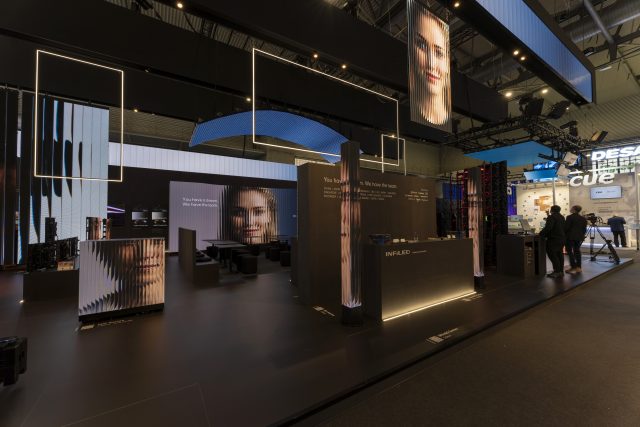
Infiled

This article explains how pixel pitch actually impacts viewing distance, cost, and image quality, and how to determine what level of resolution is truly appropriate for your use case.

What Pixel Pitch Really Represents

Pixel pitch refers to the distance in millimeters between the centers of two adjacent pixels. Smaller pixel pitch values indicate more pixels per square meter, which increases resolution. This relationship is straightforward in theory, but the implications become more complex in real installations.

A finer pixel pitch allows viewers to stand closer to the display without perceiving individual pixels. However, once the pixel structure becomes indistinguishable at a given viewing distance, further reductions in pixel pitch do not improve perceived image quality.

In other words, pixel pitch defines a threshold, not a guarantee. Crossing that threshold makes the image appear continuous. Going beyond it often delivers diminishing returns.

Understanding this concept is essential when evaluating whether a higher-resolution display will actually be noticed by the audience.

Viewing Distance Is the Primary Constraint

The optimal pixel pitch is determined primarily by viewing distance. Displays intended for close interaction, such as control rooms, broadcast studios, or high-end corporate interiors, benefit from finer pixel pitches because viewers are often within one to two meters of the screen.

In contrast, displays viewed from several meters away, such as large conference rooms, retail spaces, or event stages, rarely benefit from ultra-fine pixel pitches. At those distances, the human eye cannot resolve the additional detail.

A common rule of thumb is that the minimum comfortable viewing distance in meters roughly equals the pixel pitch in millimeters. While not exact, this guideline helps prevent overspecifying resolution where it adds no practical value.

INFiLED evaluates viewing distance alongside content type and environment to avoid recommending pixel pitches that increase cost without improving usability.

Cost Implications of Finer Pixel Pitch

Reducing pixel pitch significantly increases cost, not just because of higher LED density, but also due to tighter manufacturing tolerances, more complex electronics, and increased calibration effort.

Finer pitch displays require more LED chips, more driver ICs, and more precise assembly. This increases not only the purchase price but also power consumption, heat generation, and potential points of failure.

Maintenance costs also rise. Smaller LEDs are more sensitive to damage, and repairs become more challenging. In some technologies, damaged areas may require full module replacement rather than individual LED repair.

For many projects, choosing a slightly larger pixel pitch can reduce total cost of ownership without sacrificing visible image quality. The key is identifying where that balance lies.

Infiled

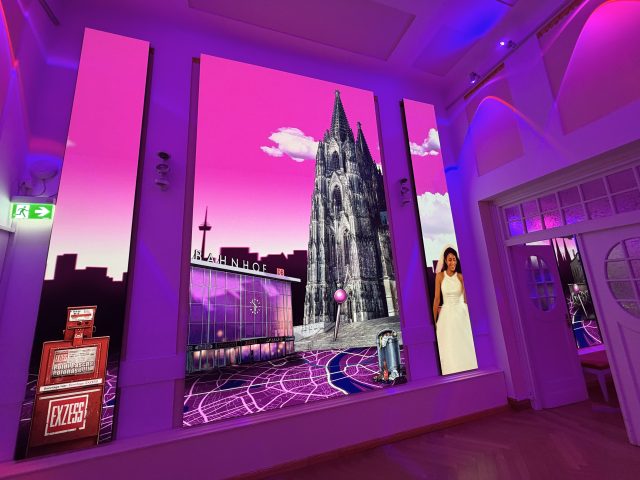
INFiLED fine pixel pitch LED screen-WP Series in Cologne’s oldest theatre

Image Quality Goes Beyond Resolution

Resolution alone does not define image quality. A higher-resolution display with poor color uniformity, inconsistent brightness, or visible calibration drift can look worse than a lower-resolution display that is well engineered.

Pixel pitch interacts with other factors such as LED package type, surface reflectivity, and calibration accuracy. At very fine pitches, minor inconsistencies become more noticeable, not less.

Additionally, content quality matters. Upscaling low-resolution or heavily compressed content to an ultra-fine pixel pitch does not create additional detail. In some cases, it can make artifacts more visible.

This is why experienced manufacturers focus on holistic image performance rather than promoting the smallest possible pixel pitch.

When Ultra-Fine Pixel Pitch Makes Sense

There are scenarios where ultra-fine pixel pitch delivers clear value. Broadcast studios, simulation environments, and high-end control rooms often require close viewing, high detail, and minimal visual artifacts.

In these cases, fine pixel pitch supports readability, reduces eye strain, and improves the integration of LED displays into architectural spaces. However, success still depends on proper system design, calibration, and thermal management.

INFiLED’s experience with fine-pitch installations shows that these projects succeed when pixel pitch is selected as part of a broader performance strategy, not as a standalone objective.

Common Mistakes in Pixel Pitch Selection

One of the most frequent mistakes is choosing the smallest pixel pitch available to future-proof an installation. While this sounds logical, it often leads to unnecessary expense without extending the useful life of the display.

Another mistake is ignoring content workflows. If the source content, processing chain, or viewing habits do not support the added resolution, the investment yields little return.

Some buyers also underestimate the operational impact. Finer pixel pitches require more careful handling, stricter environmental control, and higher maintenance standards.

Avoiding these pitfalls requires aligning technical choices with real-world usage, not theoretical performance.

Choosing Pixel Pitch With Purpose

The right pixel pitch is the one that meets visual requirements at the intended viewing distance without introducing unnecessary cost or complexity. Bigger numbers are not inherently worse, and smaller numbers are not inherently better.

By understanding how pixel pitch affects perception, budget, and system behavior, buyers can make more confident, rational decisions. INFiLED approaches pixel pitch selection as part of an integrated system design, ensuring that resolution supports, rather than drives, overall performance.

When pixel pitch is chosen with purpose, the result is a display that looks right, performs reliably, and delivers value throughout its lifespan.

User registration
Join us to download our content. It only takes a moment!

    I have read and accept the privacy policy

    This site is protected by reCAPTCHA and Google.

    It looks like you are visiting the website from
    Select your region: