Confirm

The Most See-Through Panel Isn’t Always the Right One: How to Compare Transparent Touring LED

02.10.2026

Ask most buyers how they compare see-through LED and they give you one number: transparency. It is easy to print on a quote and easy to rank in a spreadsheet. It also tells you less about a tour than almost any other line on the sheet.

A tour is decided by other questions. Will the screen stand in rain on a festival field, with the back protected as well as the front? How does it look on the IMAG cameras? What does a square metre weigh, and what does that do to the rigging plan? Every transparent touring LED product is a bundle of trade-offs, and the right bundle depends on the show. Here is a checklist for comparing them, with the compromises stated plainly.
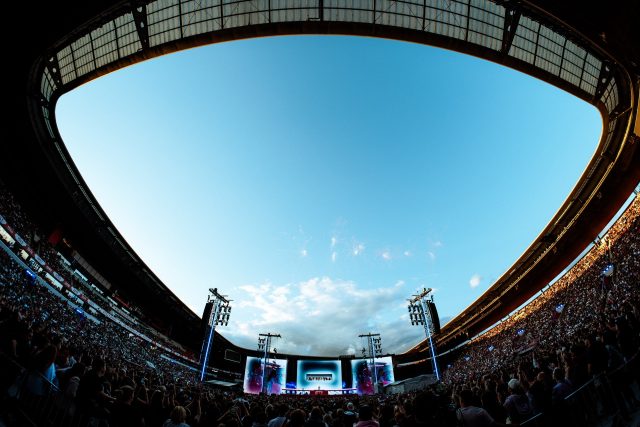
Wide view of Eden Stadium in Prague with the LED stage at the far end under a clear sky

Transparency is a starting point, so ask what the figure covers

Open area decides how much of the stage, the lighting and the performer shows through the screen, and you pay for it in image density. On the Black Widow AMT series page, INFiLED lists a 7.8 mm mesh model at 51% transparency. At that pitch the panel carries 16,384 pixels per square metre, against 65,536 on the 3.9 mm solid model.

So the first question for any quote is which model and mode the percentage describes. On that page the 51% belongs to the 7.8 mm mesh model alone. The solid models are listed at 0%, and the dynamic mode, which drives the 3.9 mm panel at 7.8 mm pitch, appears in the table as a setting of a solid model. A fair comparison of transparent touring LED starts with like for like: the same mode at the same pitch.

Then expect the usual trade. Dedicated transparent panels vary widely in open area, and the newest ultra-light designs go well beyond 51%. More open and lighter generally means lower brightness and indoor-only protection, which is a sensible deal for a show that never meets weather. The Hilltop Hoods arena tour is that kind of date: a sold-out indoor run on a 7.8 mm mesh system, with lighting effects passing through the screen and one unified 4K canvas carrying content and live camera feeds.

Check the weather rating on both sides, then the wind and height limits

An outdoor tour needs an IP rating stated for the front and the rear. IP codes are defined in IEC 60529, and the IEC’s own explainer makes a point buyers often miss: a rating describes how a product was tested, not the conditions where it can safely be used. A see-through build is open to weather from behind as much as from the front, so a front-only figure settles little. The Black Widow AMT page states IP65 front and rear. Many transparent touring LED products carry an indoor-only rating, with outdoor variants sold separately, so check which version the quote prices.

For wind, the page lists builds up to 26 m and a rating of 20 m/s, and mentions a wind brace system among the build options, so ask whether the rating assumes it. Twenty metres per second is about 39 knots, inside the 34 to 40 knot band the US National Weather Service Beaufort table calls a gale, force 8. The post on what 20 m/s means on site covers the festival detail.

Then ask which configuration the rating was calculated for, since solid and perforated surfaces need separate load calculations, and whether it holds at full height with and without bracing. Ask, too, who decides when the screen comes down. The festival association YOUROPE’s draft weather checklist asks the LED screen trade to confirm manufacturers’ wind and rain limits and to lower, tilt or power down screens as limits approach. The rating is the supplier’s limit. The wind plan is yours.

On camera and in daylight, brightness and refresh need testing, not trusting

For daytime dates, ask transparent touring LED suppliers for a brightness figure per model and per mode, because they differ. The series page lists 3,600 nits for the 7.8 mm mesh and 4,000 nits for the 3.9 mm solid model, and the dynamic mode is listed lower than either. A software pitch switch is a real convenience, and it costs output. Judge any figure against the light on your stage at its worst.

Refresh deserves the same scepticism. The page lists 7,680 Hz on all three models, and lower rates are common in the category, so the figure is worth comparing but not worth trusting alone. What an IMAG camera sees also depends on scan rate, processing, shutter setting and sync, which the post on flicker, moiré and camera issues covers for broadcast walls. Put the screen in front of your own cameras, at your own frame rates and the brightness you will run, before you sign.

The Bad Bunny world tour shows the stadium end of this. The page describes a main screen more than 40 m wide, built from 462 Black Widow AMT panels, with live IMAG shot on 4K cinema cameras rather than traditional broadcast-style concert cameras. It credits those cameras and jet-black LED chips with deep contrast, and black-faced modules with keeping light from other sources from affecting the picture. Those are INFiLED’s own project claims, so treat them as leads to test, not results.

Weight per square metre sets the rigging plan, and lighter is not always better

When comparing transparent touring LED on weight, ask for the assembled square metre, with frames, bars, bracing and cabling, not only the bare cabinet. The series page lists 1 m by 1 m cabinets at 29 kg for the solid models and 26.3 kg for the 7.8 mm mesh, so about 26 to 29 kg per square metre before the extras. Dedicated lightweight transparent panels are usually lighter, and the gap shows up in point loads on flown builds, in truck space and in crew hours.

The show changes the answer. For an indoor theatre-style production with a modest grid and no weather to protect against, a lighter, more open panel can simply be the better call: you shed protection you will not use and mass you would have to hang. For a stadium run, or any build that has to stand tall in wind, the heavier panel brings the 26 m build height, 20 m/s rating and IP65 front and rear listed on the page.

The last variable is whether the same stock also covers solid builds. Some makers run two cross-compatible lines, one solid and one transparent, that share rigging, with each panel fixed at one resolution. The Black Widow AMT page describes another route: one family that switches between 3.9 mm and 7.8 mm in software, with no module swaps. The post on solid, mesh or both makes the inventory case in full.

A seven-point checklist for comparing transparent touring LED

Put the same seven questions to every supplier, and score the answers against your show, not each other’s brochures.

CheckAsk the supplierWhere the trade-off sits
TransparencyWhich model and mode does the percentage describe?More open area costs image density.
WeatherIs the IP rating stated for front and rear, on the version quoted?Indoor-only panels are lighter but cannot go outdoors.
Wind and heightWhat configuration was the rating calculated for, and does it hold at full height?Mesh and solid need separate load calculations.
BrightnessWhat are the nits per model and per mode?The most open, lightest designs tend to be dimmer.
CameraWhat are the refresh and scan rates, and can we test with our cameras?A high refresh figure does not guarantee a clean shot.
WeightHow many kilograms per assembled square metre?Lighter panels ease rigging but often give up protection or brightness.
InventoryDoes the same stock cover solid builds?Two lines mean two fixed pitches; one family can switch in software.


Choose a panel with IP65 front and rear and the brightness figures the Black Widow AMT page lists for stadium and festival dates and any show in the open, or when solid and mesh sections share one screen. Choose a lighter, more open indoor panel for theatres and arena rooms with a tight grid and no weather. INFiLED’s transparent LED solutions page lists the other transparent options in the range. Decide on the show first and the percentage last.

User registration
Join us to download our content. It only takes a moment!

    I have read and accept the privacy policy

    I agree that INFiLED EUROPE, SL processes my personal data to review and, where appropriate, investigate and reply to the message I have sent, according to the privacy policy, which I have read and accept without reservation, and which gives additional information on this processing and on how to exercise my rights of access, rectification, restriction, erasure, objection and portability of my data.

    This site is protected by reCAPTCHA and Google.

    It looks like you are visiting the website from
    Select your region: