Some briefs fail not because the video wall is the wrong product, but because it is too much product. Too heavy for the structure that has to hold it. Too opaque for a building the architect wants to remain visible. Too expensive per square metre for the area it needs to cover. Too solid for a scenic concept that was built on structure and negative space in the first place. The answer to those briefs is not a smaller screen. It is a different geometry.
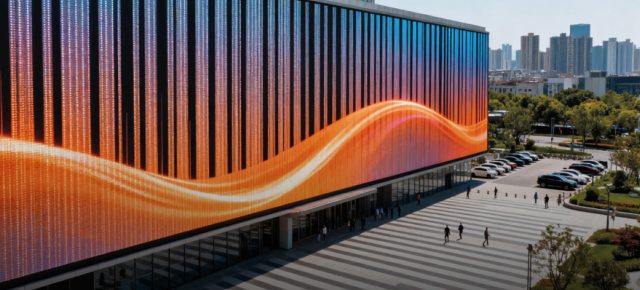
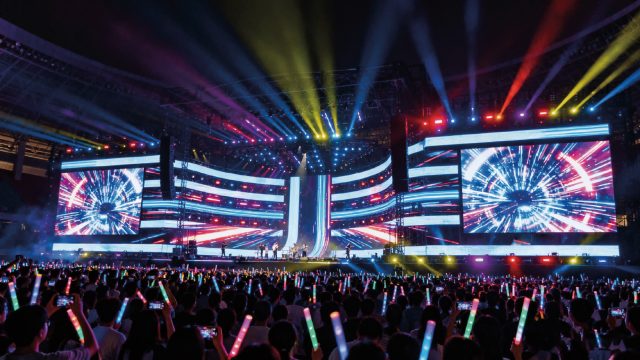
There is a category of project where every conversation with an LED supplier goes the same way and ends the same way. A designer describes something linear and open — light running across a facade, a stage built from vertical elements with air between them, an installation that traces the shape of a building rather than covering it. The supplier quotes a video wall. The number comes back too high, the weight comes back too high, and the design gets replaced with architectural lighting fixtures that cannot display content.
Which is a genuinely different product to specify. Five things worth understanding:
- When a video wall is the wrong answer
- Building with lines instead of surfaces
- Bright enough for the environments it actually lives in
- The system architecture is the real story
- Living outdoors, permanently