Confirm

Brighter, Cooler, More Efficient: How Flip-Chip LED Technology is Transforming Digital Displays

07.04.2025

In today’s rapidly evolving display technology landscape, efficiency, performance, and design flexibility are key considerations for businesses and industries that rely on LED screens. 

Traditional LED technology has significantly improved over the years, but a newer innovation, flip-chip LED technology, is taking energy efficiency, brightness, and longevity to the next level. 

Flip-chip LEDs offer superior heat dissipation, lower power consumption, and increased reliability by eliminating the need for fragile wire bonds and utilizing direct chip-to-circuit board connections. 

In our bespoke ColdLED Technology, we’ve applied the Flip-chip method to redefine how LED chips connect to the board. In this article, we’ll explore key aspects of Flip-chip technology, combining our first-hand expertise to keep you informed.


What is Flip-chip LED Technology?

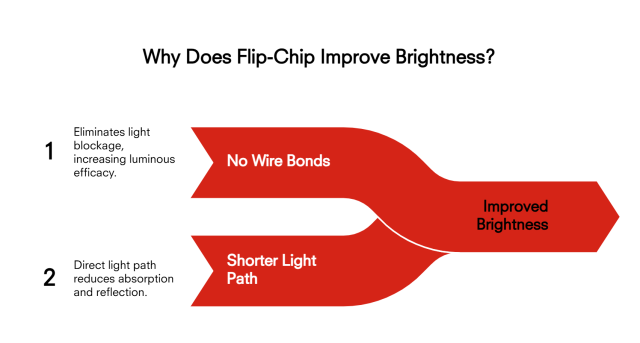
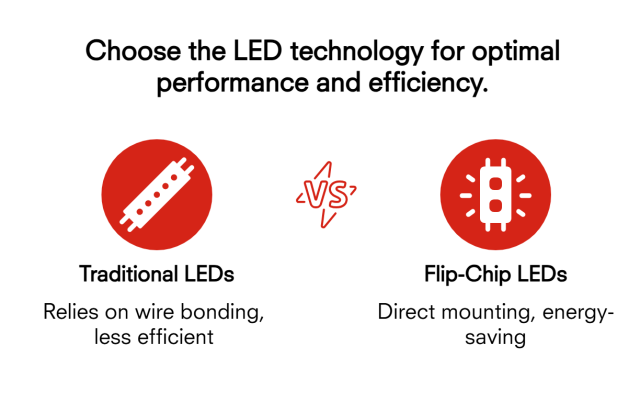
Flip-chip LED technology, at its core, eliminates the traditional wire bonding process used in standard LEDs. Instead of relying on fragile wires to connect the LED chip to its substrate, flip-chip LEDs mount the chip directly onto the circuit board with a metal solder bump.

This direct contact minimizes resistance and improves heat dissipation, both of which contribute to significant energy savings.
Infiled

This technology is a key driver behind the growing popularity of LEDs in corporate, retail, and other high-end environments.

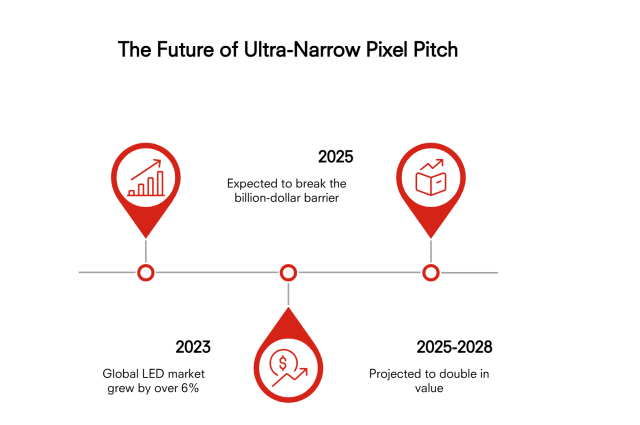
According to a pro display report from Futuresource Consulting, the global LED market grew by more than 6% in 2023, with over half of the market concentrated in narrow pixel pitch displays, which rely on flip-chip-on-board technology.

Industry experts predict this growth will continue to speed up, expected to break the billion-dollar barrier in 2025, and powering on to more than double in value between 2025 and 2028, as businesses increasingly seek cost-effective, high-performance display solutions.

Lower Power Consumption, Higher Efficiency

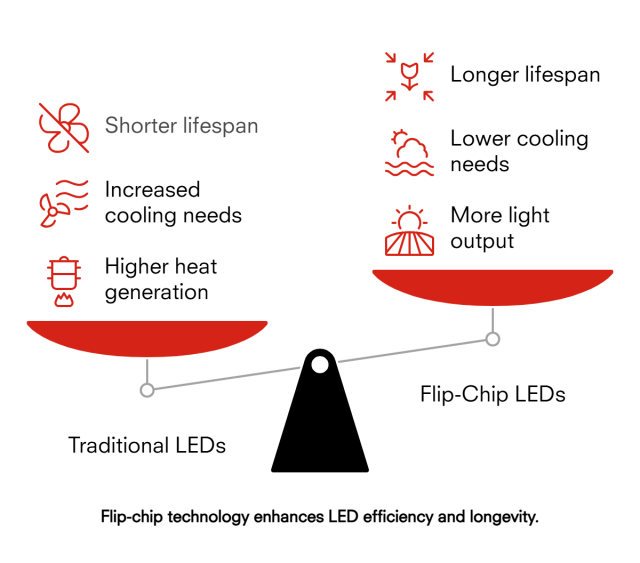
Flip-chip LEDs operate at lower voltages while maintaining high brightness levels. Because there’s less electrical resistance and heat buildup, less energy is wasted as heat. When it comes to LEDs, less waste means:

Infiled
  • More light output per watt: Flip-chip LEDs convert more electrical energy into visible light rather than heat, improving overall luminous efficacy.
  • Lower cooling requirements: Traditional LEDs often require additional cooling mechanisms to prevent overheating, which increases energy consumption. Flipping the chip enhances thermal management, reducing or eliminating the need for extra cooling.
  • Longer lifespan: Heat is the enemy of LED longevity. Flip-chip technology extends the lifespan of displays by preventing thermal degradation — reducing the frequency of replacements and maintenance.


Sustainable and High-performing

Flip-chip LED screens consume less power than other LED options without sacrificing performance. This doesn’t mean an inferior display, however. These energy-efficient LEDs are known for their high light output capability and efficiency. 

Removing the wire bond improves optical extraction and thermal performance. Better thermal management allows LEDs to be driven at higher currents without overheating, which means higher brightness potential. Many flip-chip-based LED displays achieve very high brightness levels (e.g.,>800 nits for indoor use and much higher for certain outdoor models) while maintaining stability. 


Infiled

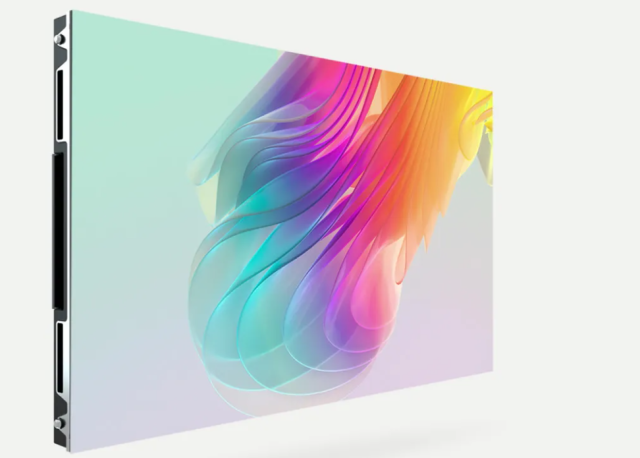
A good example is the WP1.2 Flip from our WP Series, where we have applied the flip-chip LED technology and its brightness can achieve up to 1000-nits. 

Infiled

WP1.2 Flip LED display product from INFiLED WP Series

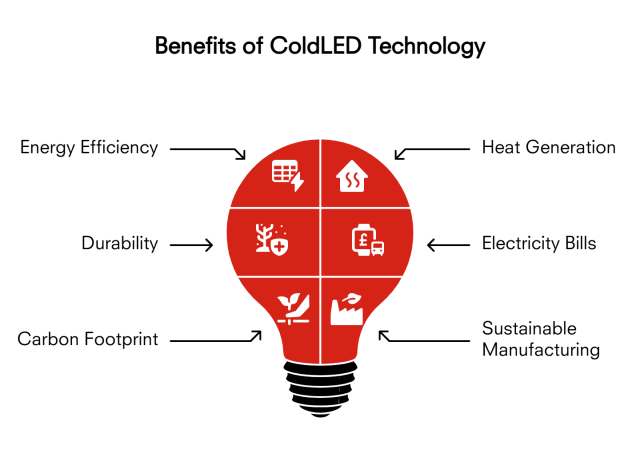
A large-scale LED display’s energy efficiency directly impacts a business’s operational costs. Advancements in LED technology, such as flip-chip and INFiLED’s self-developed ColdLED technology, are helping reduce power consumption without sacrificing performance. 

For example, ColdLED technology achieves similar benefits to flip-chip by enhancing energy efficiency, lowering heat generation, and improving durability. These innovations translate into lower electricity bills and a reduced carbon footprint. 

Additionally, these technologies contribute to more sustainable manufacturing processes with fewer materials for wire bonding in flip-chip LEDs and improved structural design in ColdLED.

Slimmer, Sleeker Displays

Having something that will get the job done is just part of the solution. Technology is also part of the design in high-end corporate and hospitality spaces. 

Today’s boardrooms, conference rooms, hotels, and conference centers demand sleek, high-performance display solutions that seamlessly blend aesthetics with cutting-edge innovation. That’s where flip-chip technology can make a visible difference by enhancing modern spaces’ visual impact and design flexibility.

Flip-chip LED technology supports ultra-thin, bezel-free displays. Because Flip-chip LEDs dissipate heat more efficiently than traditional LEDs, they require less bulky heat management components. This allows for:

  • Seamless video walls: Perfect for high-end boardrooms and conference centers where an immersive, edge-to-edge display creates a clean and sophisticated look.
  • Ultra-thin profiles: Hotels and luxury spaces benefit from discreet, space-saving displays that blend into architectural elements without overwhelming the environment.
  • Flexible installation: Whether wall-mounted, recessed, or freestanding, these LED panels can be integrated into a variety of designs without intrusive hardware.
Infiled

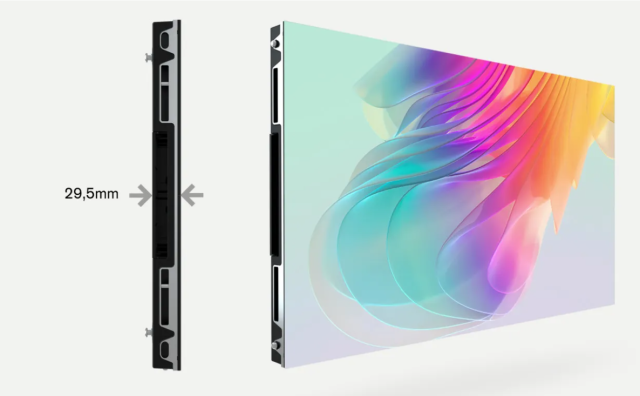
INFiLED WP Series features an edge thickness of only 29.5mm

Vivid, High-Definition Visuals in Any Lighting Condition

Conference rooms and event spaces don’t always offer ideal lighting conditions, making some LED screens hard to view. However, flip chip technology enables superior contrast, brightness, and consistent color accuracy, making it easier to use displays under any conditions and clearly view content from any angle. 

By directly mounting the LED chips, often with a black epoxy or coating, flip-chip Chip-on-Board (COB) assemblies maximize the black, non-emissive area of the screen. This effect can be observed when an LED screen is off; the pixel appears truly black rather than glowing or reflecting ambient light. 

As a result, flip-chip COB displays can achieve contrast ratios that reach tens of thousands to one (static contrast), which is higher than conventional LED panels. The improved contrast and brightness reduce glare, ensuring crisp presentations and video conferencing. 

In practical terms, this means whiter whites and blacker blacks on screen.

Content appears more vivid and “pops” more, which is especially important for signage that needs to catch eyes and control rooms or broadcast sets that require clear images under bright studio lights.

The color accuracy in flip-chip screens is due to improved uniformity and manufacturing precision when creating the COB modules. That consistency directly leads to consistent color output from each subpixel. The result is colors that are more saturated and consistent across the screen and at different angles.

In practical use, a flip-chip LED wall in a corporate lobby can faithfully reproduce brand colors and logos, and a fine-pitch LED video wall in a TV studio can meet the stringent color calibration needed for on-camera accuracy. 


Reliable Solutions for Long-Term Use 

Luxury hotels and high-traffic conference centers require display solutions that work flawlessly around the clock. LED screens with flip-chip technology are ideal for ‘always-on’ use. In addition to their energy efficiency, advanced LED screens like this one offers longer lifespans and require minimal maintenance. 

Lower heat means a longer lifespan. While thermal performance is important for lighting efficiency, it also plays a critical role in the total lifespan of an LED, which is why it’s a must to maintain low running temperatures to maximize the lifespan of any LED screen.

A 2016 study on a smart LED lighting system built with temperature sensors explains how and why this is the case. Maintaining low temperatures is simple for flip-chip LEDs, thanks to their high-efficiency thermal dissipation.

Alongside lower running temperatures is the amount of power an LED screen uses. When less power is required, the result is a longer lifespan. With LED screens, that power is related to higher luminosity efficiency, or how bright your LED is per watt.

Flip-chip LEDs offer high-efficiency brightness. While that’s good for energy sustainability and heat generation, it also positively affects lifespan. 


The Difference Is in the Details 

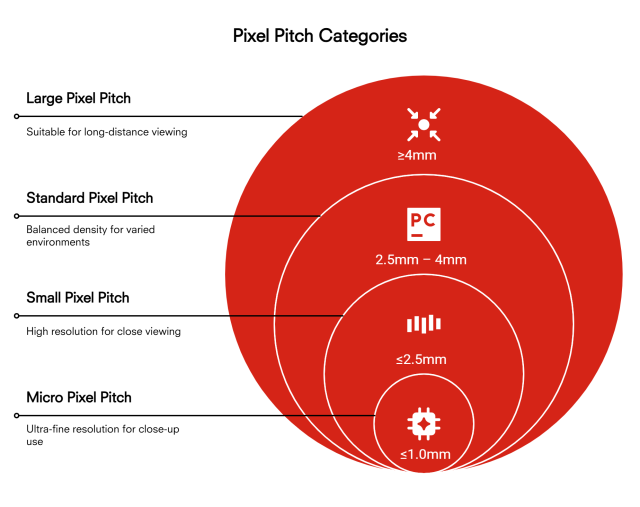
Flip chip technology, conceptually, is quite simple, but how does such a small change make so much of a difference? The reason is pixel pitches. Pixel pitches represent the distance between pixel centers. 

Because there are no wire bonds or bonding, flip-chip LEDS have significantly smaller pixel pitches(also called fine pixel pitch). In fact, the chip-scale spacing on these types of LEDs is close to the ultra-high-resolution you’d find in microLED displays used in smartwatches and VR applications. 

Infiled

Such fine pitches translate into extremely high resolutions on LED video walls, even at modest screen sizes. The ability to pack a larger number of smaller LEDs also reduces the “screen door” effect (visible gaps between pixels), producing a seamless image even at close viewing distances. 

This seamlessness is critical for applications like corporate briefing centers or TV studios where viewers (or cameras) may be close to the screen. 

Fine pixel pitch also ensures crisp text and detailed graphics for up-close viewing in boardrooms, allowing broadcast video walls to appear as continuous, high-definition backdrops on camera. 

In large digital signage, such as retail spaces, higher resolution means content can be shown with greater detail and clarity, enhancing the viewer’s experience and the sign’s visual impact.

Infiled

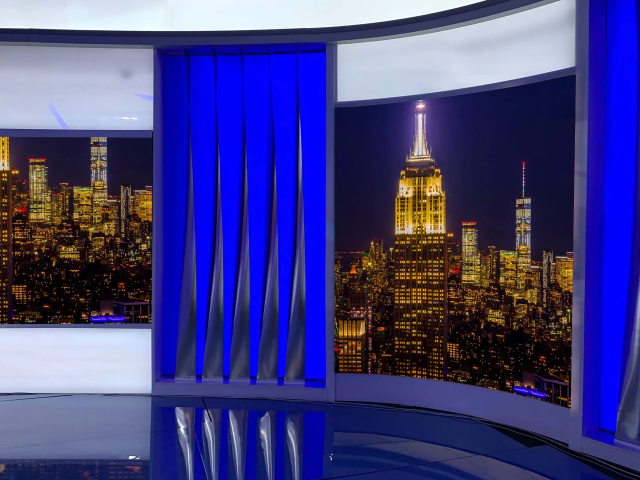
TV Studio AI Sharqiya featuring LED volume from INFiLED WP Series

Innovative Solutions for Multiple Business Applications 

Flip-chip LED technology is redefining how digital displays integrate into modern business environments, from high-end corporate boardrooms to luxury hotel lobbies and massive conference halls. 

For fine detail and close viewing, flip-chip fine-pitch LED walls provide the resolution needed for data, text, and video in boardrooms or lobbies, so even up-close viewers see a sharp image.

The high contrast and color accuracy ensure that presentation graphics, company branding, and videos appear vibrant and professional (essential for impressing clients and facilitating comprehension). At the same time, wide viewing angles mean everyone around a conference table sees the same image. 

Infiled

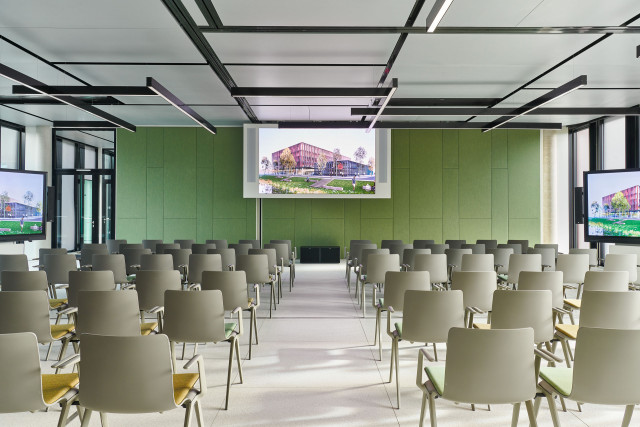
INFiLED WP Series LED screens in Sparkasse Bremen, Germany

Flip chip LED technology represents a major advancement in LED display solutions, combining high efficiency, superior brightness, and sleek design flexibility. Reducing power consumption and enhancing thermal management extends the lifespan of LED screens and supports sustainability efforts by lowering energy costs and material waste. 

INFiLED utilizes this technology to offer the perfect blend of sleek aesthetics, exceptional performance, and energy efficiency so businesses can deliver elevated visual experiences.

As industries continue to push the boundaries of display innovation, flip-chip technology stands out as a powerful solution that seamlessly blends cutting-edge engineering with real-world usability.

User registration
Join us to download our content. It only takes a moment!

    I have read and accept the privacy policy

    This site is protected by reCAPTCHA and Google.

    It looks like you are visiting the website from
    Select your region: