Confirm

German Corporate LED Lobbies and Boardrooms: Design, Integration, and the Case for High-Resolution Fine-Pitch Walls

08.06.2026

German corporate headquarters are among the most demanding markets in Europe for LED video walls, not because the technical requirements are unusual but because German procurement culture rewards documented precision over persuasive presentation. A lobby installation or boardroom display that looks impressive in a sales deck has to survive scrutiny on color accuracy, integration complexity and long-term reliability before a German facilities team will approve it.

This article covers what actually matters when specifying corporate LED for German headquarters, from lobby storytelling through to boardroom legibility and brand color management.
Infiled

Two Different Jobs: Lobby Impact and Boardroom Function

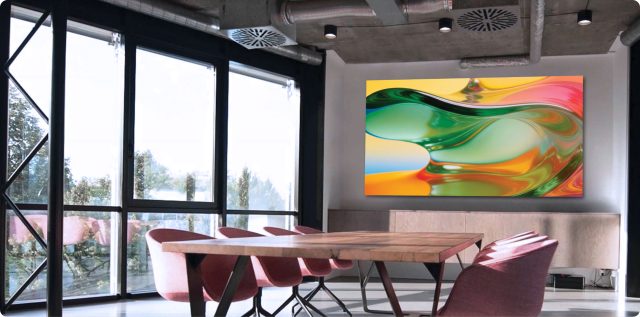
A corporate lobby LED wall and a boardroom LED wall solve different problems, even though both sit inside the same building. The lobby wall’s job is brand storytelling and wayfinding, usually viewed briefly by visitors and staff passing through, where visual impact and color vibrancy matter more than fine text legibility. The boardroom wall’s job is sustained collaboration, often displaying spreadsheets, technical drawings and video conferencing simultaneously, where pixel density and color accuracy directly affect whether the room functions well in daily use.

Treating these as the same specification problem is a common and costly mistake. A lobby-grade panel optimised for vibrant color and wide viewing angle may show visible pixel structure when used for detailed boardroom collaboration at close range, while an expensive boardroom-grade fine pitch panel may be unnecessarily costly for a lobby installation where viewers rarely stand close enough to benefit from the extra resolution.

German facilities teams evaluating a combined lobby and boardroom upgrade should request separate specifications and separate cost justifications for each space rather than accepting a single bundled proposal. This makes it easier to explain the investment internally, since a finance team reviewing the boardroom budget cares about collaboration functionality and meeting room utilisation, while the team reviewing the lobby budget cares about visitor impression and brand presentation, and conflating the two in a single line item makes both cases harder to evaluate on their own terms.

Pixel Pitch and Brand Color in Practice

Boardroom pixel pitch should be selected against the closest seating position and the smallest text or data the room will realistically display, typically requiring P1.5 or finer for rooms where spreadsheets and detailed technical content are common. Brand color accuracy is a separate, equally important specification. Corporate brand guidelines typically define exact colors, and the standard way to verify how closely a display reproduces them is Delta E, a perceptual color difference metric where a result under roughly 2 is generally considered visually indistinguishable from the target color. A clear explanation of how Delta E is measured and what tolerance levels mean in practice is a useful reference point for procurement teams asking suppliers to demonstrate compliance with brand color standards rather than accepting a general claim of accuracy.

German corporate buyers should request Delta E measurement data for the specific brand colors involved, not just generic color gamut figures. A panel with an impressively wide color gamut can still reproduce a specific corporate brand red inaccurately if it has not been calibrated against that exact target.

Infiled’s panel calibration process addresses this directly by factory-tuning each wall against the specific gray-scale and color targets a client requests, rather than shipping a generic factory calibration and leaving brand-color matching to on-site adjustment. For a German corporate client with a precisely defined brand color, that difference can determine whether the installed wall matches the brand guideline on day one or requires a costly post-installation recalibration.

Integration With German Office Infrastructure

German corporate AV environments tend to run mature, well-documented infrastructure, and LED walls need to integrate cleanly into existing signal chains covering HDMI, DisplayPort and increasingly AV-over-IP distribution, alongside wireless casting for ad hoc presentations. Thermal and acoustic design also matter more in German office environments than in many other markets, since open-plan layouts and shared meeting spaces make fan noise and heat output from a video wall noticeable to people working nearby, not just to the room’s occupants.

Installation teams should also account for German building standards around fire safety and cable management when planning the integration, since requirements here can be more rigorous than in some neighbouring markets and a display project that overlooks them late in the process can face costly rework. Coordinating with the building’s facilities engineer early, rather than treating the AV integration as a separate workstream from the building’s broader technical systems, tends to produce a smoother installation timeline.

Energy efficiency remains a genuine consideration even though most professional and large-format corporate LED walls fall outside the strictest consumer-facing EU energy labelling requirements. The EU’s own summary of the Ecodesign regulation for electronic displays confirms that professional displays are subject to reduced obligations focused on material efficiency and reparability rather than full energy labelling, which means power draw is worth evaluating on its operational merits rather than assuming a regulatory standard settles the question.

Why Germany Rewards Engineering Detail Over Sales Pitch

German corporate procurement processes typically involve facilities, IT and finance stakeholders who each scrutinise a different part of a proposal: facilities checks integration and serviceability, IT checks signal compatibility and security, finance checks total cost over the asset’s life rather than just acquisition price. Suppliers who can answer detailed technical questions about color calibration, thermal behaviour and maintenance access tend to move through this process faster than those relying on visual impact alone. Infiled’s experience working with German corporate clients has consistently shown that the projects that proceed smoothly are the ones where documented specification, not persuasive presentation, drove the final decision.

Specifying for German Corporate Standards

German headquarters upgrading lobbies and boardrooms to LED should treat the two spaces as distinct specification problems, request Delta E data against actual brand colors rather than generic gamut figures, and confirm integration compatibility with existing AV infrastructure before committing to a supplier. The German market rewards this kind of documented precision, and the LED walls that perform well in this environment for years are consistently the ones specified with that discipline from the outset.

User registration
Join us to download our content. It only takes a moment!

    I have read and accept the privacy policy

    This site is protected by reCAPTCHA and Google.

    It looks like you are visiting the website from
    Select your region: