Confirm

Vision 2030 and the DOOH Boom: What Buyers in Saudi Arabia Should Demand from Outdoor LED

05.05.2026

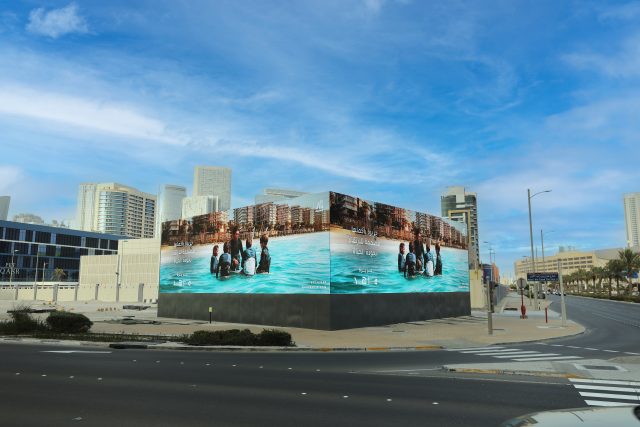
Saudi Arabia has become one of the most active outdoor LED markets in the world. Riyadh Season, Diriyah, Qiddiya, NEOM and the broader Vision 2030 portfolio are pushing demand for large-format outdoor display at a scale and pace unfamiliar to most procurement teams.

Many buyers are specifying outdoor LED for the first time, often under tight project timelines, and the supplier landscape ranges from globally established manufacturers to opportunistic resellers. Spec sheets across this range look surprisingly similar. The differences that matter only become visible after eighteen to twenty-four months in the Saudi climate. This article looks at what Saudi DOOH buyers should actually demand, and where the most expensive mistakes tend to hide.
Infiled

The Specification Trap

Most outdoor LED procurement in the Kingdom is anchored around three numbers: pixel pitch, peak brightness in nits, and IP rating. These are sensible starting points, but they reward the wrong supplier behaviour. Pixel pitch is easily quoted but means little without honest viewing-distance guidance. Peak brightness is a laboratory figure under controlled temperatures that rarely match Riyadh in July. IP ratings describe a single qualification test, not lifelong sealing performance.

A more useful procurement question reframes the issue: what brightness will this display sustainably deliver, in the actual ambient conditions of this site, after three years of operation, with documented maintenance? That single question separates suppliers who design for real Gulf deployments from those who optimise for spec-sheet wins.

Pixel pitch should be chosen against minimum viewing distance, not preference. For a typical Riyadh roadside DOOH installation with a minimum viewing distance of around fifteen metres, pixel pitches between P8 and P10 deliver clean perceptual resolution at a substantially lower cost than tighter pitches that buyers cannot actually see from the road.

What Vision 2030 Projects Actually Require

The scale of Saudi giga-projects is genuinely new. NEOM’s Utamo immersive theatre, Qiddiya’s 376 square kilometre entertainment zone, the Mukaab in New Murabba and the proliferation of Riyadh Season venues are creating a category of display deployment that conventional outdoor LED designs were not originally built for. The Vision 2030 projects portfolio effectively requires displays that combine the brightness of conventional DOOH, the colour fidelity of broadcast LED, and the reliability of mission-critical infrastructure.

Three demands stand out across these projects. Arabic and Latin script must remain legible at distance, which favours higher contrast ratios and disciplined font choices over raw pixel density. Content windows are increasingly dynamic, moving from static six-second loops to motion-led creative that exposes any weakness in refresh rate or scan rate. And the operational expectation is closer to twenty-four-seven uptime than traditional advertising rotations, which makes redundancy and serviceability central rather than optional.

Decisions That Drive Long-Term Value

Three procurement decisions tend to determine whether an outdoor LED investment in Saudi Arabia pays back.

First, thermal design. Riyadh, Jeddah and the Eastern Province all see sustained summer ambients above 45 degrees Celsius, with surface temperatures on south-facing displays significantly higher. Panels designed with conservative thermal margins, generous heat sink area and active cooling tuned for Gulf conditions hold brightness through summer afternoons rather than retreating into protective derating. Buyers should request thermal derating curves at 45 and 50 degree ambient temperatures, not just nominal performance figures.

Second, modular serviceability. Outdoor LED will fail components over time. Power supplies, receiving cards and individual modules are the most common items. Front-serviceable architectures and locally available spares determine whether a fault becomes a short maintenance visit or a multi-day outage. For high-revenue DOOH sites, the cost of downtime quickly outweighs modest hardware savings.

Third, end-to-end content pipeline. Outdoor LED is only as good as the content it displays. Programmatic DOOH measurement standards increasingly demand consistent colour reproduction, accurate timing and clean motion handling across networks of screens. Buyers should ensure their LED specification, processing and content management system are tested as a single chain, not as independent components.

Across recent Saudi deployments, INFiLED has observed that the projects which scale most smoothly are those where these three decisions were made together, with engineering input from the outset rather than retrofitted at commissioning.

Working With Suppliers Who Understand the Local Market

The fastest-growing share of outdoor LED procurement in Saudi Arabia is now coming from project consultants and main contractors with limited prior LED experience. They are sourcing for venues, attractions and Vision 2030 projects on accelerated timelines, often with multiple competing supplier proposals. The temptation in this environment is to pick the lowest compliant bid and move on. The pattern INFiLED has seen most consistently across these projects is that the lowest compliant bid frequently does not reflect the same engineering or service backbone as the alternatives, and the difference shows up eighteen months later as service calls and replacement costs that absorb any initial saving.

Buyers should request site visits to other completed deployments by the proposed supplier, particularly deployments in similar climate and use cases. A panel that has performed reliably for three years at a comparable Saudi site is a stronger reference than any datasheet claim. Suppliers comfortable with this level of scrutiny are typically the same ones whose products age well, because they have nothing to hide and their reference sites support their proposals.

What to Look Past, and What to Ask Instead

Saudi buyers receive proposals every week filled with superlatives. Useful filtering starts with ignoring claims of best-in-class brightness and instead asking for documented performance under specified ambient conditions. Ignore generic IP65 statements and ask whether independent testing has covered the specific dust, humidity and thermal cycling profile of the deployment region. Ignore pixel-pitch competition below what the viewing distance actually rewards, and use the savings to improve power redundancy, content processing and service support.

Vision 2030 will continue to generate outdoor LED demand for the rest of the decade. The buyers who consistently get value from their investments are those who treat each procurement as a long-term operating decision, not a one-time capital purchase.

User registration
Join us to download our content. It only takes a moment!

    I have read and accept the privacy policy

    This site is protected by reCAPTCHA and Google.

    It looks like you are visiting the website from
    Select your region: