Confirm

Fine Pitch on a Budget: What Government and Hospitality Buyers Get Right (and Wrong) About “Value” LED

17.08.2026

“Value” is one of the most misused words in LED procurement. For government facilities and hospitality venues working with fixed capital budgets, it usually gets translated into price per panel, the number that is easiest to compare across three vendor quotes side by side. That is an understandable shortcut, but it is the wrong optimization.

A display that is ten percent cheaper per panel but far heavier to mount, harder to service, or lacking basic power redundancy can end up costing more over five years than the option it was chosen over. Government and hospitality buyers get plenty right about value LED, they are rightly skeptical of paying for specs they do not need, but they also get some things wrong. This article breaks down what actually belongs in a value calculation for fine pitch LED.
Infiled

What Fine Pitch Actually Means, and Where the Value Trade-Offs Start

Pixel pitch is the distance, in millimeters, between the centers of adjacent LED clusters. A smaller pitch packs more pixels into the same physical area, which improves resolution and shortens the minimum comfortable viewing distance. Fine pitch generally refers to displays under roughly 2.5mm, the range where a viewer standing a few meters away sees a continuous image rather than individual LEDs.

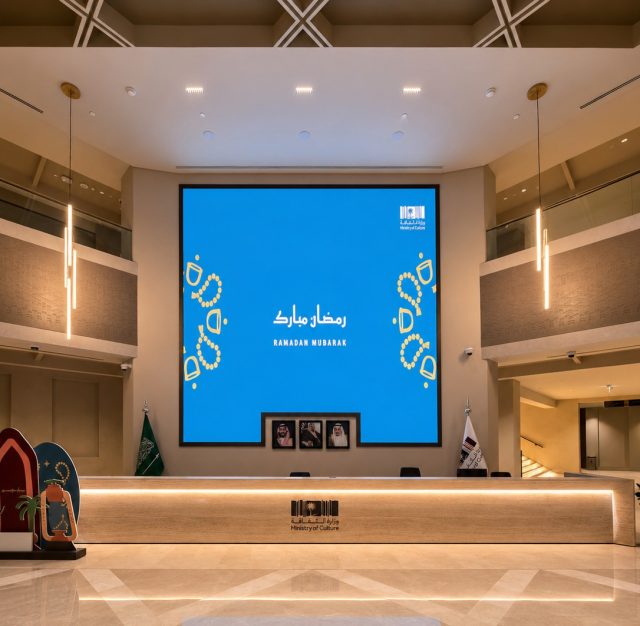
For government and hospitality applications, fine pitch matters because viewing distances are often short: a lobby display, a council chamber screen, a hotel front desk video wall. But pitch alone does not determine value. A 0.9mm display and a 2.5mm display within the same product line can share the same cabinet weight, service model, and redundancy architecture, so buyers who fixate on pitch as the primary differentiator often end up comparing the wrong variable. The real value question is not how fine the pitch is, it is what pitch the specific viewing distance actually requires, because paying for resolution nobody will perceive is its own kind of waste.

How Value Actually Plays Out in Government and Hospitality Deployments

In real deployments, three factors tend to separate genuinely good value from a display that just looked cheap on the quote. The first is installation cost, which is driven heavily by cabinet weight. A lighter cabinet, in the 4 to 5 kilogram range rather than 8 or 9, needs less structural mounting infrastructure, which matters in government buildings and hotels where the wall or ceiling was not originally engineered for a heavy fixed display. That difference alone can shift the total installed cost more than the panel price does.

The second is redundancy. Government facilities in particular, courtrooms, council chambers, emergency operations rooms, tend to run displays for extended public sessions where a failure is visible and disruptive. Redundant power supplies and dual signal loops mean a single component failure does not take the whole wall down mid session. The third is IP rating and build protection, which matters more in hospitality than buyers often assume: lobbies and public areas see dust, humidity, and foot traffic that a boardroom does not, and an IP65 rated protective option is cheap insurance against the kind of slow degradation that erodes a value purchase’s actual lifespan.

A More Useful Way to Evaluate “Value” LED

Buyers evaluating value LED for government or hospitality projects generally do a few things right already: they push back on paying for peak brightness they will never use indoors, and they are appropriately skeptical of vendors who lead with nits and refresh rate instead of answering direct questions about service and lifespan. AVIXA’s guidance on evaluating LED video wall quality makes a similar point for AV buyers generally: the specs that are easiest to compare on a sheet are rarely the ones that determine whether a display performs well for years. Where the same buyers go wrong is treating price per panel as a standalone number instead of one input into installation cost, redundancy, and serviceability.

A more reliable framework asks four questions before price ever enters the comparison: what pitch does the actual viewing distance require, what does the cabinet weigh and what does that mean for mounting, what happens operationally when one power supply or one module fails, and what is the realistic cost of a service call over a 24 or 36 month warranty window. Infiled builds its WK Series around exactly this kind of practical value calculation, prioritizing weight, redundancy, and serviceability alongside pitch options, because those are the variables that actually determine whether a value display holds up.

Common Mistakes When Buying on Price Alone

The most common mistake is comparing quotes without normalizing for cabinet weight and the mounting structure it requires, which can add unbudgeted cost after the display is already selected. A broader look at common LED video wall buying mistakes covers several of these in more depth, but weight and mounting cost are the ones that hit government and hospitality budgets hardest, since both sectors frequently retrofit displays into buildings that were not designed around them.

A second mistake is skipping redundancy to hit a lower unit price, then discovering the operational cost of a single point of failure only after a public facing screen goes dark during business hours. A third is ignoring how the display fits the space itself. Hospitality buyers replacing static art or signage with LED, the same shift driving corporate lobbies away from LCD walls, need a panel that reads as part of the room, not equipment bolted onto it, which is a value consideration price per panel never captures.

Redefining What “Value” Should Mean

Value fine pitch LED is not the cheapest display that meets a minimum spec. It is the display whose total cost, installation, redundancy, serviceability, and lifespan, comes out lowest once every factor is counted, not just the one printed on the quote. Government and hospitality buyers who already question inflated brightness and resolution claims are halfway there. The remaining step is applying that same skepticism to price per panel itself, treating it as one variable among several rather than the deciding one. Displays like Infiled’s WK Series exist for buyers making exactly that calculation, ones who want fine pitch performance without paying for headroom they do not need, and without discovering the real cost of a budget choice two years into a warranty period.

User registration
Join us to download our content. It only takes a moment!

    I have read and accept the privacy policy

    This site is protected by reCAPTCHA and Google.

    It looks like you are visiting the website from
    Select your region: