The digital signage industry is never static; you need only blink once and the tech advances. As an AV professional, this can sometimes make you feel like you’re running a race with your shoes glued to the spot. The best way to deal with this is to ensure you’re on top of emerging industry trends. It allows you to not only just keep pace with changes but get ahead of your competition and better serve your clients.
Whether you’re working in a corporate or control room environment, Micro LEDs are the next big thing in the visual display industry. Here you will find important intel on this emerging technology, from what they are to their best-use applications and more importantly, what they offer you, your clients or C-suite managers.
What is the Difference Between Micro LED and Regular LED?
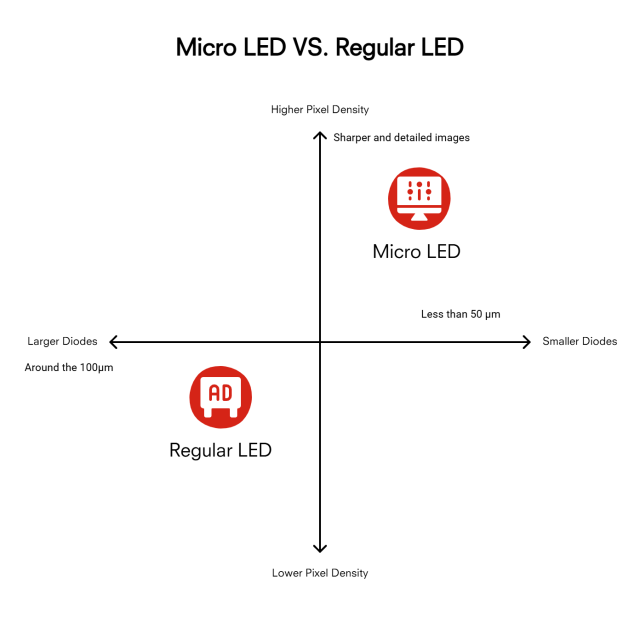
Micro LED and regular LED displays both use self-emissive technology, meaning each chip or diode emits its own light independently. Where Micro LEDs differ is the size of the diodes; they’re quite literally microscopic, typically less than 50 micrometres (µm), with some as small as 1-10µm in advanced designs. A traditional LED chip sits around the 100µm mark.
Does size really matter? It does if you want ultra-crisp visuals in close-viewing indoor environments, like control rooms or corporate settings.
Smaller LED diodes mean more LEDs can fit into a given display section, increasing the number of pixels per unit area (also known as pixel density). A higher pixel density results in sharper and increasingly detailed images.