Confirm

LED Video Walls for Austrian Critical Infrastructure: APG Power Grid Control, ÖBB Rail Operations and Emergency Coordination

13.07.2026

Austria’s control room landscape is anchored by two critical infrastructure operators whose combined operational responsibilities cover the country’s electricity supply and its rail network. Austrian Power Grid, known as APG, operates the national high-voltage electricity transmission network from its Power Grid Control centre in Vienna, described by the company as the nerve centre of Austrian electricity supply, making decisions within seconds when grid faults occur. ÖBB, the Austrian Federal Railways, manages rail traffic across a network serving more than 500 million passengers annually.

Vienna’s emergency coordination infrastructure adds a further layer of complex, 24/7 display environments requiring sustained reliability. What distinguishes the Austrian control room market from its larger European neighbours is not technical sophistication but scale: these are smaller facilities where every specification choice is harder to change once committed, making the initial decision more consequential.
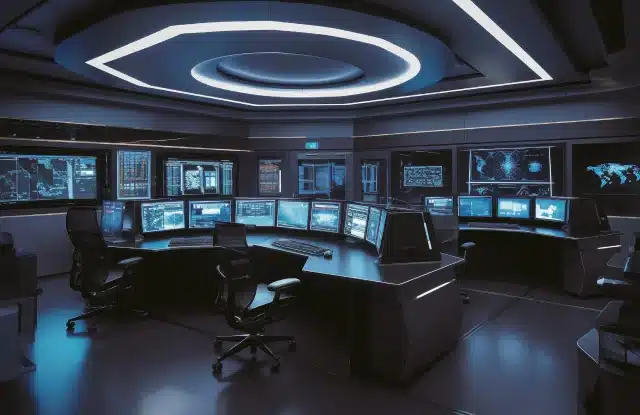
Infiled

APG’s Power Grid Control: Speed and Stability

APG’s Power Grid Control centre in Vienna’s southeast, commissioned in 2009, is the operational heart of Austria’s electricity transmission infrastructure. APG describes the centre’s role as collecting and processing all information from the domestic transmission grid, with operators required to decide whether power lines need to be connected or disconnected within seconds when a fault occurs. Austria’s commitment to meeting 100 percent of electricity demand from renewable sources by 2030, combined with existing hydropower dominance and growing solar and wind capacity, creates a dynamic grid environment where control room operators manage more variable generation than most European countries have historically faced.

For LED buyers specifying for an APG-type environment, the critical specification dimensions are response fidelity and colour stability. An operator watching a grid topology map that changes colour to indicate fault propagation needs a wall where the colour shift is immediate and accurately rendered, not delayed by refresh latency or distorted by colour drift between adjacent panels. This argues for fine pitch LED with a high refresh rate, documented Delta u’v’ color uniformity across the full panel surface and factory calibration data that confirms consistency at the lot level, not just an average specification.

ÖBB Rail Traffic Management

ÖBB operates train traffic management centres that coordinate rail movements across Austria, connecting to the Swiss, German, Italian and Eastern European rail networks at multiple border crossing points. The traffic management environment typically displays rail network maps, real-time train position data, timetable deviation information and signalling system status across a large wall that multiple operators share simultaneously. The geographic complexity of Austria’s rail network, traversing mountain terrain and multiple international borders, means the data density on a typical ÖBB traffic management wall is high relative to the wall’s physical size.

High pixel density is the natural specification response to high content density at a given wall size, but buyers should verify the pixel pitch against the specific minimum text size their content management system will display at the planned resolution, not against a generic minimum text size guideline that may not reflect actual operational content. A wall that renders the timetable deviation alerts clearly but shows pixelated text in the station name field has been specified at the wrong level of detail for the content actually displayed. ÖBB’s specific operational content mix, combining network topology maps with detailed timetable data, is worth documenting as a formal specification input before any pixel pitch recommendation is accepted from a supplier.

Vienna Emergency Coordination and Civil Protection

Vienna’s emergency coordination infrastructure, covering police dispatch, fire response and civil protection, runs some of the most demanding 24/7 display environments in Austria. These rooms need walls that never go dark, that recover from power interruptions without manual restart, and that maintain their display integrity through shift handovers and technical maintenance events without the kind of restart cycle that would be unremarkable in a corporate environment but is unacceptable when active emergency response is underway.

Redundant power supply within the LED cabinet is a standard specification requirement for this class of environment, as is the ability to hot-swap a failing module without de-powering the rest of the wall. Infiled’s control room product lines address both requirements as standard features rather than optional upgrades, which is reflected in the company’s track record supplying European emergency coordination environments where the consequences of an unplanned display outage during an active incident are not abstract.

Austrian Procurement and Technical Documentation Requirements

Austrian public-sector procurement, including APG and ÖBB as regulated infrastructure operators, follows structured tendering processes that require documented technical specifications comparable to German procurement rigour. Suppliers must be prepared to provide measured performance data, not specification sheet claims, covering luminance uniformity, colour uniformity, refresh rate under operational conditions and mean time between failures for the specific product being tendered. The EU Ecodesign framework confirms that professional displays face reparability and material efficiency obligations rather than full consumer energy labelling requirements, but Austrian buyers rightly treat documented parts availability commitments as a standard procurement requirement regardless of regulatory obligation.

Specifying LED for Austrian Critical Infrastructure

Austrian control room buyers specify for a market where facility sizes are smaller than Germany or France but operational standards are identical. The LED wall that APG’s Power Grid Control operators rely on to make grid decisions within seconds carries exactly the same reliability requirement as a TenneT wall in the Netherlands, regardless of the difference in organisational scale. Suppliers who calibrate their service and documentation commitments to market size rather than to operational requirement discover this distinction the hard way when they underserve an Austrian client whose display needs are more demanding than the revenue opportunity initially suggested.

Infiled’s Austria coverage through the company’s Central European service and logistics network ensures that APG, ÖBB and Vienna emergency coordination buyers receive the same documentation standards, response time commitments and parts availability guarantees as the company’s larger European market clients. The specification and evaluation process in Austria is not meaningfully different from Germany or France in terms of what suppliers are expected to demonstrate, and Infiled’s approach to the market reflects that operational parity rather than treating Austria as a lower-priority extension of a larger regional engagement.

User registration
Join us to download our content. It only takes a moment!

    I have read and accept the privacy policy

    This site is protected by reCAPTCHA and Google.

    It looks like you are visiting the website from
    Select your region: