Confirm

Rental LED Panels: What Event Companies Should Prioritize Beyond Price

27.04.2026

In rental LED, the purchase price is only the beginning of the cost story. A panel that looks competitive on a quote sheet can quickly become expensive once it starts slowing down builds, failing during shows, or creating service headaches between jobs. That is why experienced rental companies rarely judge a system by cabinet price alone.

The common mistake is assuming that two rental LED products with similar brightness, pixel pitch, and resolution will perform similarly in the field. They often do not. What matters in live production is how the system behaves under pressure: repeated loading, fast assembly, frequent reconfiguration, tight crew schedules, transport stress, and demanding clients who notice flaws immediately. By the end of this article, readers will have a clearer framework for comparing rental LED panels based on operational value, not just acquisition cost.
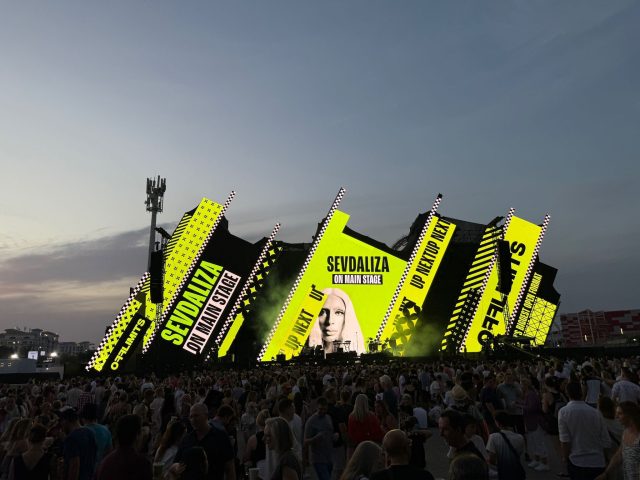
Infiled

Photo Credit © Offlimits festival

Why Cheapest Rarely Means Best Value

A low entry price is attractive, especially for growing rental firms trying to expand inventory. But the cheapest rental LED panels often shift cost into places that are harder to see during procurement. Those costs usually appear later as longer setup times, more frequent repairs, inconsistent image quality, and higher spare-part requirements.

This matters because rental LED is a utilization business. The system has to move in and out of trucks, go up fast, come down safely, and be ready for the next event without consuming too many labor hours in the warehouse. A cabinet that saves money upfront but adds an extra hour to every build, or requires constant alignment correction, is not actually cheaper over a season.

It is also important to remember that modular direct-view LED systems are valuable precisely because they are built from repeatable display elements that can be deployed in many formats. AVIXA’s overview of video wall fundamentals highlights how modularity and environmental fit shape real-world display success. In rental, that modular logic needs to support speed, repeatability, and service access, not just visual output. This is one reason buyers should treat cabinet mechanics, connector durability, and frame accuracy as commercial issues, not just engineering details.

Reliability and Downtime Risk

Rental fleets do not fail in ideal conditions. Problems usually appear during transport, load-in, rushed troubleshooting, or at the exact moment content is due on screen. That is why reliability should be evaluated not by brochure claims, but by how well a system tolerates repeated handling and real operational stress.

A panel can have strong image performance and still be a poor rental product if it is fragile, difficult to service, or prone to connector issues. Failure rates matter in any display environment, but in live events the commercial impact is immediate. A damaged receiving card, unstable power connection, or cabinet alignment problem can delay a show call, consume technician time, and damage confidence with clients who may not understand the technical cause but will remember the disruption.

Reliability also has a direct relationship to serviceability. If modules, power supplies, or receiving components are hard to replace quickly, a minor issue turns into a workflow problem. In fixed installations, service difficulty is inconvenient. In rental, it directly affects utilization and fleet readiness. INFiLED’s experience in event and touring environments reflects the broader industry reality that reliability is not just about surviving the show. It is about coming back from the show ready for the next one with minimal intervention.

This is where buyers should ask tougher questions. How many common failures can be resolved on site? How fast can damaged parts be swapped? How stable are connectors after repeated deployment cycles? How consistent is cabinet flatness after months of transport? Those questions usually reveal more about long-term value than a small purchase-price difference ever will.

Setup Speed and Labor Efficiency

In live events, setup speed is one of the most underestimated cost drivers in LED ownership. Labor, crew scheduling, overnight builds, venue access windows, and rehearsals all put pressure on deployment time. A rental LED system that assembles quickly and consistently creates value on every job, even if the purchase price was higher.

This is not only about whether a cabinet is “easy to build.” It is about whether the full system reduces friction. Fast-locking mechanisms, repeatable cabinet tolerances, intuitive rigging options, reliable alignment, accessible power and data connections, and clean modular design all affect how much labor is needed to achieve a solid result. When those mechanics are poor, crews spend more time correcting seams, reseating panels, chasing intermittent signal problems, or rebuilding sections that should have gone up correctly the first time.

Rental companies should also think beyond headline speed claims. A system may assemble quickly in a controlled demo but lose that advantage when used across curved builds, touring packs, flown arrays, or mixed indoor and outdoor events. The relevant question is whether speed holds up across repeated real-world deployments.

There is a second benefit here that buyers sometimes overlook: faster builds reduce fatigue-related mistakes. In practical terms, that means fewer damaged components, fewer alignment issues, and less last-minute technical stress before content checks. INFiLED often frames this as an engineering and workflow issue rather than a marketing point, and that is the right lens. In rental LED, deployment efficiency is not a convenience feature. It is part of the cost structure.

Image Quality and Client Perception

Rental buyers sometimes treat image quality as secondary, assuming that most clients only care that the wall is bright and large. That is usually a mistake. Clients may not use technical language, but they notice poor black levels, inconsistent color, uneven calibration, visible seams, noisy low-brightness performance, and weak on-camera behavior.

This matters because rental LED often appears in the most visible part of an event. It may sit behind keynote speakers, appear in IMAG shots, carry sponsor branding, or dominate the visual impression of a launch or concert. A system that looks acceptable in a warehouse can disappoint quickly under show lighting, broadcast cameras, or premium brand content.

Image quality in rental is also not just about the panel face. It is about the system maintaining consistency over time. Calibration drift, mismatched replacement modules, poor grayscale handling, and unstable color accuracy become more visible as fleets age. AVIXA’s coverage of direct-view LED technology explains why packaging approach, brightness behavior, and pixel structure all influence performance in professional AV applications. Its review of LED package evolution is a useful reminder that image quality starts at the technology level, not only in content processing.

For rental companies, image quality affects more than aesthetics. It shapes client trust, repeat bookings, and the ability to win higher-value work. A fleet that consistently looks clean on camera and in person is easier to resell to premium clients than one that only competes on day rate.

Maintenance, Spare Parts, and Longevity

A rental fleet should be evaluated like a working asset, not like a one-time purchase. That means maintenance planning, spare-part strategy, and expected service life need to be part of the buying decision from the start.

The most important question is not whether the panels will eventually need service. They will. The question is how predictable and manageable that service burden will be. In rental applications, frequent transport, repeated assembly, and varying environments create more wear than fixed installations. That increases the importance of accessible components, field-replaceable modules, stable mechanical design, and sensible spare-part planning.

Buyers should look closely at what has to be stocked to keep the fleet working efficiently. If a system requires too many unique parts, or if replacements are slow to source, the operational risk rises. Warehouse time also matters. Technicians should be able to inspect, clean, test, and restore the fleet without excessive manual effort between jobs.

AVIXA has also highlighted that total cost of ownership is a meaningful consideration as direct-view LED matures. Its discussion of direct-view LED TCO reinforces the point that long-term ownership costs should be considered alongside acquisition price. For rental companies, that principle is even more important because the fleet is exposed to higher handling intensity and tighter turnaround demands.

How Rental Buyers Should Compare Systems

A better rental LED comparison process starts by treating the system as an operating platform rather than a hardware line item. Price still matters, but it should be weighted against the costs the product creates or reduces over its working life.

A practical comparison framework should include:

  • build speed in real crew conditions
  • cabinet robustness during transport and repeated handling
  • service access for modules, power, and control components
  • calibration consistency across a growing fleet
  • spare-part strategy and part commonality
  • performance on camera and at lower brightness levels
  • alignment stability in flat and curved configurations
  • expected labor burden in warehouse prep and post-show turnaround

That kind of comparison tends to expose false savings quickly. A panel that is slightly cheaper but slower to build, harder to maintain, and less consistent visually will often become the more expensive option over time.

For event producers, this also changes how vendor proposals should be judged. The cheapest fleet rate may not be the safest choice if the system carries more risk of delay or visible quality issues. For rental companies, it shapes where margin is actually protected. INFiLED’s broader design philosophy is relevant here because it reflects a practical truth across professional LED: performance, serviceability, and repeatability usually create more value than headline savings.

Rental LED panels should be bought with the next hundred shows in mind, not just the first invoice. The strongest fleets are not always the cheapest to acquire, but they are easier to deploy, easier to maintain, more consistent in image quality, and less likely to create costly failures under pressure. That is what turns an LED system from an expense into a dependable revenue-producing asset.

User registration
Join us to download our content. It only takes a moment!

    I have read and accept the privacy policy

    This site is protected by reCAPTCHA and Google.

    It looks like you are visiting the website from
    Select your region: