Confirm

Touring LED Walls: What Production Companies Should Look For

01.02.2026

Touring LED walls are judged in a harsher way than fixed installs. They are loaded, flown, struck, trucked, rebuilt, and run under time pressure, often by different crews, in different venues, with unpredictable power and climate. The biggest misconception is that touring performance comes from a single spec like refresh rate or brightness.

In practice, the real differentiator is how the wall behaves as a piece of touring infrastructure: rigging speed, mechanical tolerance, module swap time, color consistency between batches, processor stability, and how many problems it creates during show week.
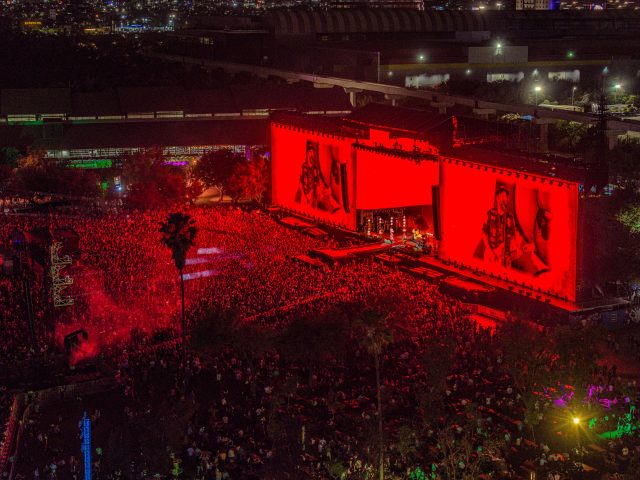
Infiled

Photo Credit © Global Trend Pro

Touring LED Walls: The Specs That Actually Matter

A touring LED wall is a modular LED system designed for repeated assembly and transport. It typically includes cabinets, modules, power supplies, receiving cards, rigging hardware, and a processing stack. Touring differs from fixed install because mechanical handling and service frequency are part of normal operation.

Key terms that matter in rental reality:

  • Cabinet format and rigging: how panels lock, align, and fly. A wall can look perfect in a warehouse but become uneven if the mechanical system cannot hold tolerances after repeated cycles.
  • Pixel pitch: affects perceived resolution, but in touring it is secondary to reliability unless the show is camera-critical.
  • Brightness (nits) and calibration: touring shows demand consistent look across walls built from mixed inventory. Uniformity after swaps is a daily reality.
  • Refresh behavior and scanning: impacts camera capture and perceived stability, especially for broadcasted concerts and IMAG.
  • Serviceability: the speed and safety of module replacement in the field.

For many rental operations, the “best” wall is the one that reduces labor minutes and show-day faults, not the one that wins a spec comparison.

Where Touring Walls Break Down (And What To Check First)

A touring LED wall rarely fails in a dramatic way. It fails in small ways that steal time, create stress, and make the wall look inconsistent on camera.

Mechanical alignment is a performance spec

In touring, the most common visible defects are not dead pixels. They are seams, steps, and slight misalignments that show up under grazing light or camera pans. Those defects usually come from mechanical wear, latch tolerance, and frame rigidity. Buyers should evaluate how the cabinet holds flatness under:

  • repeated locking and unlocking cycles
  • minor frame impacts during transport
  • temperature changes between truck and venue
  • large flown arrays where weight and flex accumulate

Fast module swaps are the difference between calm and chaos

Field service is not optional. A touring LED wall must support quick module replacement with predictable results. The question is not “can it be serviced,” but:

  • can it be serviced while the wall is built
  • can it be serviced safely at height
  • does a replacement module visually match without hours of tuning

The faster a crew can isolate a fault and swap a module, the lower the show risk and overtime exposure.

Color consistency across batches is a rental business problem

Touring inventory is often expanded over time. New batches can look slightly different in brightness and color, especially at low grayscale. If the system does not support robust calibration management, rental companies end up with walls that “patchwork” when mixed.

Color consistency is one of the hardest problems to fix after purchase. It should be evaluated up front with:

  • grayscale ramp tests at typical show brightness
  • skin-tone and neutral tests (stage camera reality)
  • a plan for calibration data management across inventory

Processing stability matters more than extra features

Touring shows often run complex routing, multiple content feeds, and last-minute changes. Processing stability and predictable behavior under stress reduce failure probability. Processing platforms with strong touring adoption are often preferred because their behaviors are well understood by crews. Brompton’s processing overview is one example that discusses why frame management and feature sets like HDR workflows and genlock matter in live environments.

Buyer Criteria That Reduce Show-Week Risk

Rental and touring buyers should evaluate touring LED walls with a “total show risk” lens: labor time, failure domains, and camera outcomes.

Rigging and build speed directly impact profitability

Touring LED walls that build faster reduce crew hours and increase turnaround. Buyers should look at:

  • how quickly cabinets align and lock
  • how forgiving the rigging is when floors are imperfect
  • how corner and curve solutions integrate without custom hacks
  • the weight per square meter and how that affects motor count and trucking

A wall that saves 20 minutes per build, across a long tour, is often worth more than a marginal image spec improvement.

Camera performance depends on the whole chain

For shows captured for broadcast or social, refresh behavior, scanning, and brightness modulation affect flicker and banding. These artifacts are often tied to PWM dimming interactions with rolling shutters. A technical explanation of LED flicker sampling and why camera artifacts appear is covered in Imatest’s analysis of LED flicker signals.

Buyers should validate camera performance at:

  • typical show brightness
  • common shutter angles used by the production team
  • both wide shots and close IMAG shots

Redundancy should be targeted, not generic

Touring buyers benefit from redundancy when it reduces show-day downtime:

  • modular power zones so one PSU fault does not drop a large region
  • data redundancy where a single cable failure does not black out a column
  • clear diagnostics that help crews find the fault quickly

A touring LED wall that fails gracefully is often more valuable than a wall that rarely fails but is hard to diagnose when it does.

Maintenance model and spares determine uptime

A serious rental buyer should plan:

  • spare modules and cabinets per tour size
  • spare power supplies and receiving cards
  • a module swap process and a post-swap visual check routine
  • how calibration data is managed so replacements match

This is where INFiLED’s engineering approach is relevant: touring outcomes improve when the wall is designed for rapid field service and predictable calibration behavior, because rental teams live in the reality of swaps, not the theory of “factory perfect.”

A practical evaluation checklist for touring LED walls

Warehouse tests that reveal touring behavior

Run tests that match touring stress:

  • build and strike multiple times to check latch wear and alignment drift
  • build large arrays to evaluate flatness and seam behavior
  • run grayscale ramps at show brightness to see low-end consistency
  • test a deliberate module swap and measure time to restore a clean look
  • validate processing behavior during source changes and reboot scenarios

Operational questions buyers should ask

  • How are modules keyed and tracked for calibration matching?
  • What is the expected module swap time in a flown wall?
  • What diagnostics are available to isolate faults quickly?
  • What is the service documentation quality and parts availability?
  • How does the system handle mixed-batch inventory over time?

If suppliers cannot answer these clearly, the risk shifts to the rental company.

Selecting a Wall That Protects Uptime and Reputation

Touring LED walls should be selected like production infrastructure, not like a showroom display. The most important factors are mechanical alignment over repeated cycles, fast and safe serviceability, color consistency across inventory, stable processing under show pressure, and targeted redundancy that prevents small faults from becoming show-stoppers.

Pixel pitch and headline brightness matter, but they rarely decide whether a tour runs smoothly. The rental buyers who win long-term are the ones who buy walls that reduce labor, protect uptime, and keep camera performance predictable. INFiLED’s strongest fit in touring comes from the same engineering mindset: design for field reality, calibration discipline, and repeatable performance across the full lifecycle of rental use.

User registration
Join us to download our content. It only takes a moment!

    I have read and accept the privacy policy

    This site is protected by reCAPTCHA and Google.

    It looks like you are visiting the website from
    Select your region: