Confirm

What to Ask an LED Manufacturer Before Signing a Contract

06.03.2026

Signing an LED contract is usually the point where buyers feel they are reducing risk. In reality, it is often the point where risk gets locked in. Most LED display problems that hurt projects later are not caused by one bad demo or one missing feature. They usually come from vague scope, weak acceptance criteria, unclear service responsibilities, unsupported assumptions about uptime, and too much attention on headline specs instead of operational fit. Good procurement practice starts by aligning system capabilities with real operational goals, not by buying technology for its own sake. AVIXA’s needs assessment guidance is still useful on that point, but the broader procurement logic is also reinforced by NIST’s supply-chain risk guidance.

That matters because buyers are usually not purchasing an LED wall as a one-time visual object. They are purchasing an operating asset that has to be installed, supported, serviced, updated, and kept reliable over time. NIST’s guidance on cybersecurity supply-chain risk management and software acquisition both support the same principle: acquisition decisions should account for supplier risk, maintenance, upstream dependencies, and ongoing support, not just initial delivery.
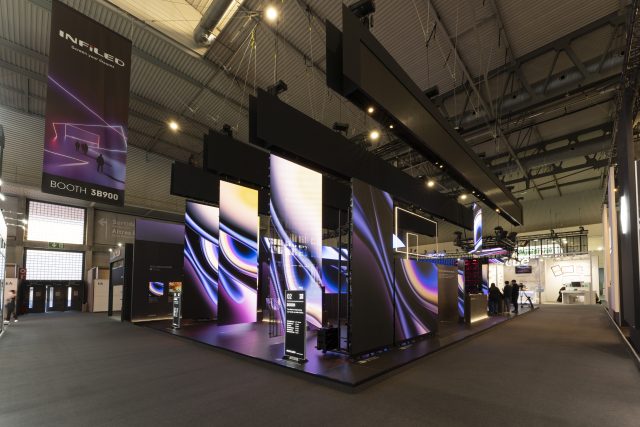
Infiled

An engineering-led buying process therefore starts with better questions. The goal is not to challenge the vendor for its own sake. The goal is to expose how the system will perform in the real world, what happens when something fails, how service will be handled, and whether the manufacturer can support the deployment over the full life of the project. That is the difference between buying a display and buying a system that can actually be operated with confidence.

Context and buyer challenge

The first question to ask an LED manufacturer is not about brightness or pixel pitch. It is: what problem is this system actually being designed to solve? If a manufacturer cannot clearly connect its recommendation to your environment, content type, service model, and viewing conditions, the proposal is already weaker than it looks. Strong project planning frameworks consistently begin by matching the technical system to the real user need and operating context.

That means buyers should ask the manufacturer to define the intended use case in operational terms. Is this a control room, a premium retail environment, a corporate lobby, a virtual production stage, a live-event rental application, or a campus-wide signage network? Each one places different demands on durability, service access, calibration stability, power behavior, software management, and maintenance. A vendor that responds with mostly generic marketing language instead of application-specific trade-offs is not helping the buyer make a reliable decision.

A second context question is: what assumptions are built into the proposal? Buyers should ask what the manufacturer is assuming about ambient light, daily runtime, access for service, structural support, environmental conditions, processor workflow, and client-side content systems. Many project disputes happen because one side treated these as obvious while the other never formally agreed to them. This is exactly why defined scope and clear statements of work matter so much in complex AV projects.

A third question is: what will be contractually verified at handover? This is critical. If the contract does not define what counts as successful delivery, buyers are left arguing later about whether the system is “good enough.” Performance verification is not administrative overhead. It is one of the clearest ways to prevent avoidable disputes after installation.

Technical or operational considerations

One of the most important technical questions is: how will performance be measured in the installed environment, not just in a showroom? Ask the manufacturer what on-site criteria will be used for brightness consistency, color uniformity, dead-pixel tolerance, power behavior, thermal behavior, and visible seams or alignment. A strong manufacturer should be comfortable translating sales claims into measurable acceptance expectations. That is a much stronger signal than a polished demo.

Buyers should also ask: what is the service model for the specific product line being proposed? This includes front- or rear-service access, field-replaceable components, spare-part strategy, lead times for modules and controllers, and whether repairs require specialized tools or factory-only intervention. These are not minor implementation details. They directly affect downtime, labor cost, and long-term maintainability. Lifecycle support increasingly matters more than first-cost comparison in real procurement decisions.

Another key question is: what software, firmware, or network-connected components are part of the system, and how are they maintained? Modern LED systems often depend on processors, media players, CMS platforms, remote management layers, and network-connected control elements. NIST and CISA both make clear that acquisition and maintenance of third-party software and services should be treated as part of procurement and risk management, not as a separate afterthought. Buyers should ask how updates are delivered, how vulnerabilities are addressed, how compatibility is maintained, and what happens if a software dependency is discontinued.

That leads to another essential question: what supply-chain transparency can the manufacturer provide? NIST’s cyber supply-chain risk guidance emphasizes continuous management of supplier-related risk and the need to understand upstream dependencies. For LED buyers, that means asking about component availability, alternate sourcing, expected product life, replacement compatibility, and the manufacturer’s approach when a critical part becomes unavailable. In a contract, this is where lifecycle reassurance becomes more valuable than aggressive launch pricing.

It is also smart to ask: what documentation will be included? A strong contract should not result in a black-box system. Buyers should expect documentation for system topology, power and signal architecture, maintenance procedures, software versions, warranty conditions, and handover testing. Clear documentation is part of successful delivery, not optional admin.

Performance, reliability, and long-term value

A contract should force clarity on the question buyers care about most after installation: what happens when something goes wrong? Ask the manufacturer for concrete support commitments, not broad assurances. What are the response-time expectations? What are the escalation paths? Which failures are covered under warranty, and which are treated as billable service? Are replacement parts stocked regionally? Can temporary operational workarounds be used while permanent repairs are arranged? These questions matter because support quality is often the real differentiator once the wall is live.

Another long-term question is: how does this system age? Ask about expected brightness retention, calibration drift, replacement matching, environmental tolerance, and whether the manufacturer can support visual consistency when only part of the wall is serviced or refreshed. Buyers should be wary of contracts that highlight launch-day performance without addressing year-three and year-five operating reality. Long-term value depends on how the system behaves after repeated use, not just how it performs on day one.

For networked and managed systems, buyers should also ask: what is the policy for software support over time? If the LED solution depends on CMS software, remote access layers, or embedded control software, the contract should clarify update cadence, support windows, vulnerability handling, and change-management expectations. NIST and CISA both frame software acquisition and software supply-chain security as ongoing responsibilities, not one-time procurement decisions.

Value should also be framed beyond the initial product invoice. Ask the manufacturer to explain the likely operating profile of the system, including maintenance requirements, common failure points, recommended spare holdings, and ongoing support assumptions. A lower-priced system can quickly become the more expensive option if it requires more site visits, more fragile service workflows, or faster component obsolescence.

Common mistakes and decision guidance

One common buyer mistake is asking mostly feature questions and too few support questions. It is easy to compare pixel pitch, brightness, or cabinet thickness. It is harder, but more important, to compare service access, firmware governance, spare-part commitments, and acceptance-testing discipline. The better buying process is the one that converts vague promises into specific operational requirements.

Another mistake is assuming the contract will sort itself out later once the product choice is made. In practice, the contract is where buyers either protect themselves or give away leverage. If response times, acceptance criteria, documentation, training, and support responsibilities are missing or vague, the project is already exposed. Defined scope and role clarity are what keep projects from drifting into disputes later.

A third mistake is ignoring software and supply-chain questions because the purchase is thought of as “hardware.” That is increasingly outdated. NIST’s recent guidance makes clear that acquisition, use, and maintenance of third-party software and services are part of procurement risk, and its broader supply-chain work reinforces the importance of ongoing vendor management and traceability. In modern LED deployments, these concerns are very real, especially in networked signage, managed display networks, and enterprise environments.

The most practical decision-making takeaway is this: before signing, buyers should push the conversation from product claims to operating reality. Ask what will be verified. Ask how service works. Ask how updates are handled. Ask what parts are stocked. Ask what assumptions the design depends on. Ask how the system will still be supported several years from now. A manufacturer aligned with long-term value should be able to answer those questions clearly and contractually, not just conversationally.

The best LED contract is not the one attached to the most impressive demo. It is the one that leaves the fewest critical questions unresolved. For buyers who want real-world performance and long-term reliability, that is the standard worth using before anything gets signed.

User registration
Join us to download our content. It only takes a moment!

    I have read and accept the privacy policy

    This site is protected by reCAPTCHA and Google.

    It looks like you are visiting the website from
    Select your region: