Confirm

Why Color Accuracy Matters More Than Brightness in Professional LED Displays

15.12.2025

Brightness is often the first specification people notice when evaluating LED displays. Higher nit values are easy to compare and seem to promise better visibility and stronger visual impact. In professional environments, however, brightness alone rarely determines whether a display performs well.

Many LED displays are capable of producing far more brightness than they will ever need in real operation. When pushed too hard, excessive brightness can actually degrade image quality, distort colors, and reduce long-term reliability. What ultimately defines a professional display is how accurately it reproduces color across different brightness levels and over time.
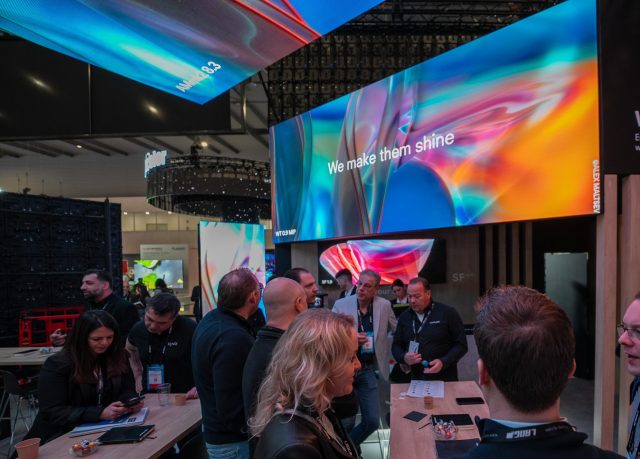
Infiled

To clear up the misconception between brightness and color accuracy, we take a closer look at why color accuracy matters more than peak brightness, and how prioritizing it leads to better real-world LED performance.

Brightness Is Only Useful Within a Controlled Range

Brightness is essential in certain environments, particularly outdoors or in high-ambient-light spaces. Beyond that requirement, increasing brightness delivers diminishing returns. Most indoor LED displays operate at a fraction of their maximum rated output.

At higher brightness levels, many displays struggle to maintain consistent color balance. Whites can shift, saturation can drop, and subtle gradients may become uneven. These effects are especially noticeable in professional settings where visual precision matters.

Excessive brightness also contributes to viewer fatigue. In control rooms, studios, and corporate spaces, displays are often viewed for extended periods. Comfortable brightness combined with stable color reproduction is far more important than sheer luminance.

What Color Accuracy Really Means in LED Displays

Color accuracy refers to how closely a display reproduces intended colors compared to a known reference. This includes correct hue, saturation, and brightness across the full grayscale range.

Unlike brightness, which is a single measurable output, color accuracy depends on multiple factors working together. LED binning, driver quality, calibration processes, and thermal stability all influence how consistently colors are rendered.

Poor color accuracy can result in skin tones looking unnatural, brand colors appearing incorrect, or data visualizations becoming harder to interpret. These issues undermine trust in the display, regardless of how bright it is.

We at INFiLED prioritizes color consistency and calibration stability because these factors directly affect how professional content is perceived.

Calibration and Long-Term Stability

Factory calibration establishes a baseline, but it is only the starting point. Over time, LED characteristics change due to heat, usage patterns, and component aging. Displays that lack robust calibration systems can drift, leading to visible color differences between cabinets or across the screen.

Long-term color stability is particularly important in large video walls. Small deviations become obvious when content spans multiple panels. Maintaining uniformity requires stable components and consistent calibration workflows.

Brightness-focused designs often overlook this aspect, optimizing for maximum output at the expense of stability. Displays designed with color accuracy in mind tend to age more gracefully and maintain visual integrity longer.

The Relationship Between Brightness and Color Performance

Brightness and color accuracy are closely linked. As brightness increases, maintaining accurate color becomes more challenging. Higher current levels generate more heat, which affects LED behavior and color balance.

Professional displays are engineered to deliver accurate color within a defined brightness range rather than chasing the highest possible nit value. This approach results in more predictable performance and easier calibration.

In environments such as broadcast studios and corporate presentation spaces, accurate color reproduction supports clearer communication and more reliable visual storytelling. Brightness, once sufficient, becomes secondary.

Why Color Accuracy Impacts More Use Cases Than Brightness

Most professional LED applications are indoor or semi-controlled environments. In these settings, accurate color reproduction has a greater impact on perceived quality than additional brightness.

Brand presentations, live events, and data visualization all rely on color to convey meaning. Inaccurate colors can distort brand identity or misrepresent information. Viewers may not consciously identify the issue, but the display will feel less credible.

Brightness, on the other hand, becomes noticeable only when it is insufficient. Once minimum visibility requirements are met, improvements in color accuracy provide more tangible benefits.

Common Mistakes When Evaluating Displays

One common mistake is assuming that higher brightness automatically means higher quality. This mindset often leads to displays being operated at unnecessarily high levels, introducing visual and operational issues.

Another mistake is overlooking calibration capabilities. Without proper calibration tools and processes, even displays with good initial color performance can degrade quickly.

Buyers also sometimes underestimate the importance of environment. Lighting conditions, wall finishes, and viewing angles all affect how color is perceived. A display optimized for brightness may perform poorly once installed in a real space.

Designing for Visual Integrity, Not Just Impact

Professional LED displays are tools for communication. Their purpose is not just to attract attention, but to convey information accurately and comfortably.

By prioritizing color accuracy over excessive brightness, manufacturers and integrators can deliver displays that perform better in everyday use. INFiLED’s approach reflects this philosophy, focusing on balanced performance that supports long-term reliability and visual trust.

When color accuracy is treated as a core requirement rather than an afterthought, LED displays become more effective, more comfortable to view, and more aligned with professional expectations.

Infiled
User registration
Join us to download our content. It only takes a moment!

    I have read and accept the privacy policy

    This site is protected by reCAPTCHA and Google.

    It looks like you are visiting the website from
    Select your region: