Confirm

Flip-Chip vs SMD vs COB: Which LED Technology Is Best for Which Use Case?

01.12.2025

Choosing between Flip-Chip, SMD, and COB LED technology is one of the most misunderstood decisions in professional LED projects. On paper, all three promise high brightness, fine pixel pitches, and long lifespans. In reality, each behaves very differently once installed, calibrated, maintained, and viewed over time.

Many buyers approach this decision assuming newer automatically means better, or that a single LED package type is universally superior. That assumption often leads to mismatched systems, inflated budgets, or disappointing long-term performance. The right choice depends less on marketing claims and more on how the display will actually be used.
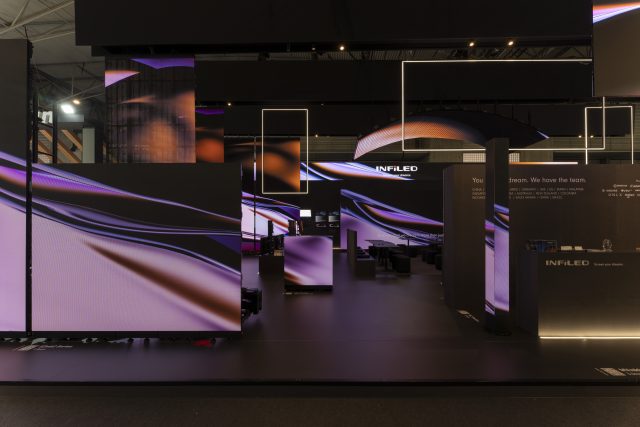
Infiled

This article breaks down how Flip-Chip, SMD, and COB LED technologies differ in structure, performance, reliability, and application suitability, so you can make an informed, project-specific decision.

Understanding the Fundamentals of LED Package Technologies

At a basic level, the difference between SMD, COB, and Flip-Chip lies in how the LED chips are mounted, protected, and integrated into the display module. These structural choices directly affect brightness efficiency, heat dissipation, repairability, and visual consistency.

SMD, or Surface-Mounted Device, places individual red, green, and blue LED chips into a single package mounted on the PCB. This has been the industry standard for years and remains the most widely deployed technology across indoor and outdoor LED displays.

COB, or Chip-on-Board, mounts multiple LED chips directly onto the substrate and covers them with a protective resin layer. This creates a smoother surface and improves physical durability, especially at very fine pixel pitches.

Flip-Chip is not a separate display category but a chip-level architecture where the LED chip is mounted upside down, allowing direct electrical and thermal contact with the substrate. Flip-Chip can be used within both SMD and COB designs, though it is most commonly associated with high-end COB displays.

Understanding these structural differences is essential before evaluating performance claims.

How Each Technology Performs in Real Deployments

SMD remains dominant because of its balance between performance, cost, and serviceability. It offers strong brightness levels, good color reproduction, and relatively straightforward maintenance. Individual LEDs can be repaired or replaced without swapping entire modules, which matters for rental environments and large fixed installations.

However, as pixel pitch becomes finer, SMD faces physical limits. Smaller LED packages become more fragile, and surface-mounted chips are more exposed to impact, moisture, and contamination. This is where COB and Flip-Chip solutions attempt to solve real-world problems.

COB displays excel in durability and visual uniformity at very fine pixel pitches. The resin-coated surface reduces glare, minimizes moiré effects, and protects the LEDs from accidental contact. These properties make COB attractive for control rooms, broadcast studios, and premium indoor environments where viewers are close to the screen.

Flip-Chip technology improves heat dissipation and electrical efficiency by eliminating traditional wire bonding. Lower operating temperatures generally translate into longer lifespan and more stable brightness over time. This becomes especially relevant in high-brightness applications or environments with limited cooling.

That said, these advantages come with trade-offs. COB and Flip-Chip displays typically cost more, are harder to repair at the component level, and may require full module replacement if damage occurs.

Practical Implications for Different Use Cases

For rental and staging applications, SMD remains the most practical choice. Displays are frequently assembled, disassembled, transported, and repaired under time pressure. The ability to quickly service individual LEDs and keep spare modules compatible across product generations is a major operational advantage. INFiLED’s rental-focused designs reflect this reality by prioritizing robustness, calibration consistency, and field serviceability rather than chasing the smallest possible pixel pitch.

In fixed indoor installations such as corporate lobbies, retail flagships, or control rooms, the decision becomes more nuanced. COB and Flip-Chip solutions can deliver smoother visuals at close viewing distances and reduce visual fatigue, especially under controlled lighting. However, buyers must factor in long-term maintenance strategies and replacement costs, not just initial image quality.

For broadcast and studio environments, surface uniformity, color stability, and low reflectivity matter more than peak brightness. COB displays with Flip-Chip architecture often perform well here, provided the integrator understands calibration workflows and redundancy planning.

Outdoor and high-brightness applications still favor SMD and Flip-Chip SMD designs. Environmental exposure, thermal stress, and service access outweigh the benefits of COB’s protective coating, which is less suited to extreme outdoor conditions.

Common Misconceptions That Lead to Poor Decisions

One of the most common mistakes is assuming COB automatically delivers better image quality. While COB excels at fine pitch uniformity, a well-calibrated SMD display can outperform a poorly tuned COB system in color accuracy and brightness consistency.

Another misconception is equating Flip-Chip with zero maintenance. While Flip-Chip improves reliability, it does not eliminate the need for proper thermal design, power management, or calibration. System-level engineering still determines long-term performance.

Buyers also often underestimate the importance of repair strategy. A display that looks exceptional on day one can become a liability if a single damaged area requires full module replacement at a premium cost.

INFiLED’s experience across rental, fixed, and broadcast projects shows that the most successful systems are chosen based on application realities, not technology trends.

Cost, Longevity, and Total Ownership Considerations

Initial purchase price rarely tells the full story. SMD displays typically offer the lowest upfront cost and the most flexible repair options, which can significantly reduce total cost of ownership over time.

COB and Flip-Chip solutions may justify their higher cost in environments where close viewing, premium aesthetics, or reduced glare directly impact user experience. However, these benefits only materialize when paired with proper system design and realistic maintenance planning.

Thermal management also plays a critical role. Flip-Chip architectures can improve heat transfer, but without adequate cabinet ventilation and power design, those advantages are quickly lost. Longevity depends on the entire system, not just the LED package.

This is why experienced manufacturers focus less on promoting a single technology and more on matching the right solution to the actual operating conditions.

Choosing the Right Technology Starts With the Use Case

There is no universally best LED package technology. SMD, COB, and Flip-Chip each excel under different constraints, budgets, and viewing scenarios. The best results come from understanding how the display will be used, serviced, and perceived over time.

For many projects, a well-engineered SMD solution remains the most balanced choice. For others, especially where close viewing and premium visual consistency matter, COB or Flip-Chip designs may offer meaningful advantages. INFiLED approaches these decisions from a system-level perspective, prioritizing long-term performance over spec-sheet comparisons.

The key is not choosing the most advanced technology, but the most appropriate one for the job.

User registration
Join us to download our content. It only takes a moment!

    I have read and accept the privacy policy

    This site is protected by reCAPTCHA and Google.

    It looks like you are visiting the website from
    Select your region: