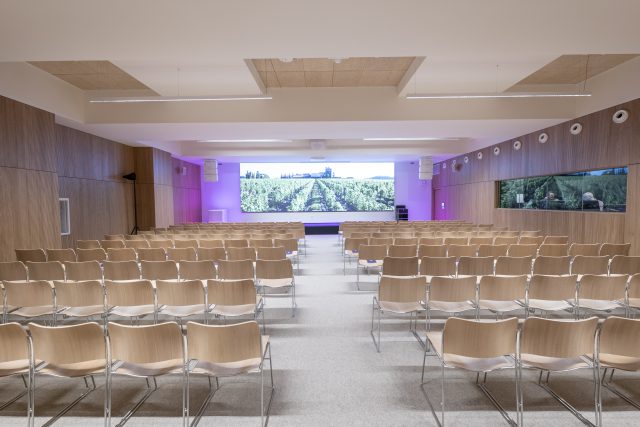
Most conversations about LED video walls start with brightness and resolution, because those are the numbers that show up first on a spec sheet. For an interior designer building a corporate reception, a retail flagship, or a hospitality lobby, that framing gets the priority backward. The screen going into a considered material palette of stone, wood, and brushed metal is not there to compete with the room. It is there to disappear into it, the same way a well-integrated light fixture disappears into a ceiling plan.
The common mistake is treating an LED wall like a piece of AV equipment that gets specified after the interior design is finished, rather than as an architectural surface that gets designed in from the start. That leads to visible ventilation gaps, a service cavity that eats into a wall’s depth, or a black panel that reads as “screen off” instead of matching the surrounding finish. By the end of this piece, the goal is a clearer sense of what actually needs to be true architecturally before nits or pixel count even enter the conversation.