Confirm

See-Through Screens Give Something Up. They Shouldn’t Give Up This Much.

26.07.2026

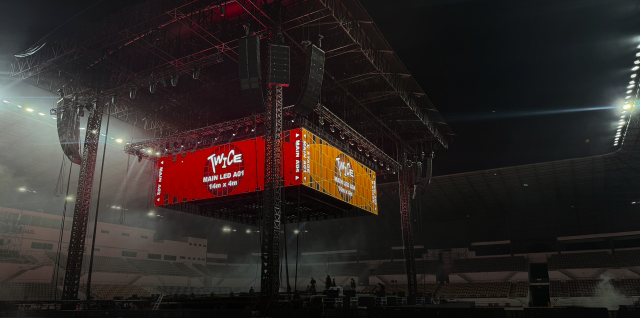
Transparent LED gets specified for one reason: the thing behind the screen matters. The lighting rig, the band, the architecture, the sky. A solid wall would erase it, so a designer asks for transparency — and then discovers that transparency is sold as a trade. Give up brightness. Give up structural rigidity. And give up any hope of the screen being anything other than flat.

There is a real physical reason for the first part of that trade. Open up the surface to let light through and there is simply less LED per square metre to produce an image. Every transparent product on the market lives with that constraint, and the honest ones say so.

What is less defensible is everything that usually gets bundled in alongside it. Transparent product has a habit of arriving dim, flimsy, and stubbornly rectangular — and the last of those three is rarely a physical necessity at all. It is a design decision, made once, that quietly narrows what the technology can be used for.
Infiled

HoloLight was built on the argument that transparency should cost you transparency, and nothing else. Five areas where that plays out:

  1. The transparency trade-off, and which parts of it are actually necessary
  2. Brightness that survives the environment it is used in
  3. Weight as a creative constraint, not just a logistics one
  4. Transparent product that curves
  5. Mixing transparent and solid on one chain

1. The transparency trade-off — and which parts of it are necessary

Three properties tend to compete in a transparent display: how much you can see through it, how bright the image is, and how rigid the cabinet is. Most product wins one and concedes the other two.

Concede brightness and the screen works beautifully in a rendering and disappears at an outdoor show in daylight. Concede rigidity and the cabinets cannot be rigged high or stacked with confidence, which caps the size of the build and rules out exactly the large-format applications that made transparency attractive. Concede transparency and you have bought a solid screen with holes in it.

HoloLight sits at 50% transparency — genuine see-through, background clearly visible — and the rest of the specification is an argument that the other two concessions are not compulsory.

Infiled

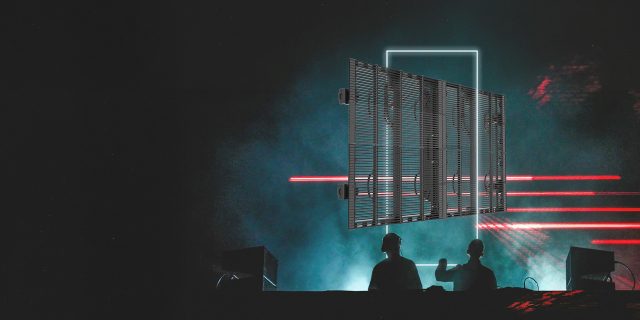
HoloLight merges transparent visuals with creative curvature for standout event displays.

2. Brightness that survives the environment it is used in

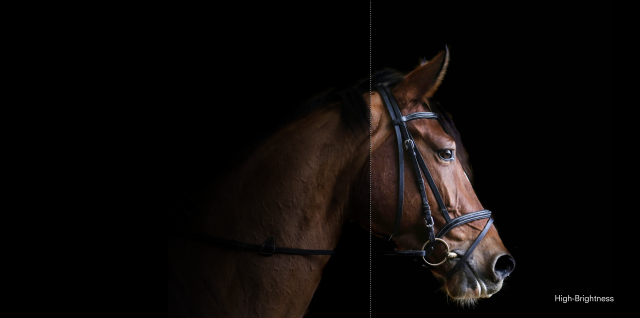
HoloLight runs at 4,500 nits.

The relevant comparison is not a showroom or an exhibition stand. It is a festival stage at four o’clock on a July afternoon, or a brand activation in an open plaza with sun on the surface. That is where transparent product is most often specified and where it most often disappoints, because the number that looked comfortable on paper was never intended for direct daylight.

At 4,500 nits, HoloLight sits well above what transparent systems typically deliver, which changes the schedule as much as the image. A screen that only reads after sunset restricts a show to the second half of the day. A screen that holds up at four in the afternoon is available for the whole event — the soundcheck, the daytime slots, the sponsor content, the afternoon crowd.

Infiled

4,500 nits of brightness for better outdoor readability than typical transparent systems.

3. Weight is a creative constraint, not just a logistics one

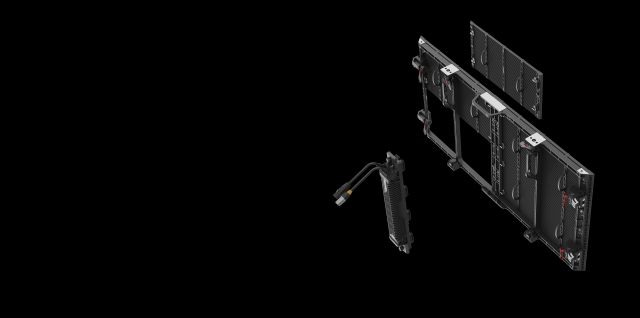
Each HoloLight cabinet weighs 7.5 kg.

The obvious benefit is load-in and load-out: lighter cabinets mean faster handling, fewer crew hours and less strain on a compressed build schedule. But the more consequential effect happens earlier, at the design stage.

Rigging load is a hard ceiling. A designer working within a fixed truss allowance is not really choosing a screen size — they are dividing an available load by a per-cabinet weight. Halve the weight and the permissible screen area roughly doubles within the same structural budget. Low cabinet weight is therefore not a logistics feature; it is the reason a larger, more ambitious design gets signed off by the production manager instead of being cut back.

The structure holds up to the consequences of being moved that often. An integrated base and metal protection strips prevent the LED surface warping in transit, which is where transparent product — with more open structure and less material to absorb a knock — is historically most vulnerable.

Infiled

Reduces rigging load and accelerates load-in/load-out cycles with 7.5 kg. 

4. Transparent product that curves

This is the section that separates HoloLight from most of the category.

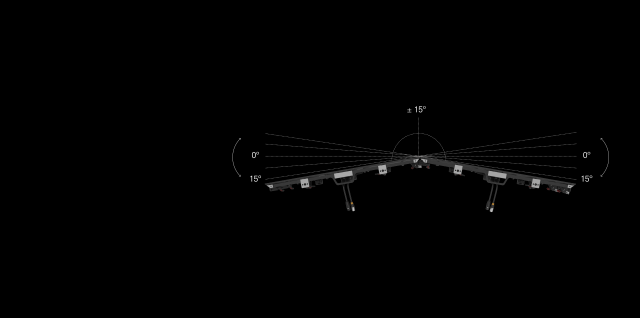
HoloLight adjusts from −15° to +15° in precise 2.5° increments, supports right angles, and offers 500 × 500 half-cabinet configurations for closing out complex geometry.

Most transparent product is flat, full stop. That constraint is invisible until a designer draws a cylinder around a DJ booth, a wrap around a structural column, a concave surround behind a performance area, or a transition that turns a corner — and is told the only way to achieve it is a faceted approximation with visible breaks at every joint.

Precise 2.5° increments matter more than the ±15° range. A coarse curve adjustment forces a designer to redraw the geometry around what the product can do. Fine increments let the product follow the geometry that was already drawn. Combined with half-cabinets, that is the difference between a curve that was designed and a curve that was negotiated.

Infiled

±15° curve and precise 2.5° increments enable smooth curved and dynamic stage builds. 

5. Mixing transparent and solid on one chain

Designers rarely want a fully transparent surface. They want transparency where it matters — over the band, in front of the rig, across the section where the architecture should show through — and full impact everywhere else.

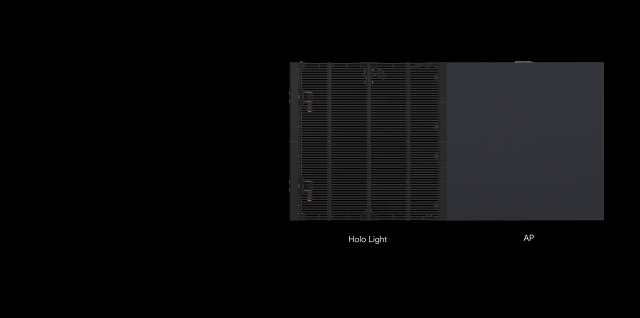
HoloLight is compatible with the AP Series, so transparent and solid sections combine within one visual setup, on one processing chain. One system to programme, one system to build, one system to service, and a single continuous canvas that changes its own density across its width.

Practical support underneath: quick locks, tool-free access to the PDU and modules, and a cabinet light enough to service at height without a fuss. Transparent product tends to be handled more carefully and serviced more often; making both faster is worth more than it sounds.

Infiled

Compatible with AP Series to combine transparent and non-transparent LED sections in one visual setup. 

The better question at concept stage

The specification conversation usually opens with “how transparent does it need to be?” That is the wrong first question, because 50% transparency delivered at 1,500 nits on a flat cabinet is a different product from 50% transparency delivered at 4,500 nits on a curve.

The better question is: what is the transparency for — and once we have paid for it, does the screen still do everything else the show needs?

If the answer is that the design has to get flatter, dimmer or smaller to accommodate the see-through, the transparency is costing more than it looks.

Related reading:

User registration
Join us to download our content. It only takes a moment!

    I have read and accept the privacy policy

    This site is protected by reCAPTCHA and Google.

    It looks like you are visiting the website from
    Select your region: