Confirm

Solid, Mesh, or Both? Rethinking Touring LED Inventory When One System Does All Three

25.07.2026

A touring rental business is not really in the screen business. It is in the utilisation business. Every square metre of LED in the warehouse either earns its keep across the season or quietly erodes the margin on the jobs that do. Which means the most expensive decision a rental firm makes is rarely which panel to buy — it is how many different panels it has to own in order to say yes to every brief that comes in.

Ask a touring supplier what sits in their warehouse and the answer is usually some version of the same three-part inventory. A solid product for high-impact content and IMAG. A mesh product for the festival looks where the audience needs to see the lighting rig, the structure, or the sky behind the screen. And a floor or deck product, because the moment a designer draws a stage extension, that is a fourth quote you cannot fulfil.

Three inventories. Three utilisation curves that rarely peak at the same time. Three sets of spares, three sets of dollies, three crew briefings, three rigging methods, three sets of drawings for the structural engineer. And when a promoter changes the design six weeks out — from solid to mesh, from fine pitch to something coarser to open up the sightlines — the answer is usually a sub-hire, at somebody else’s margin.
Infiled

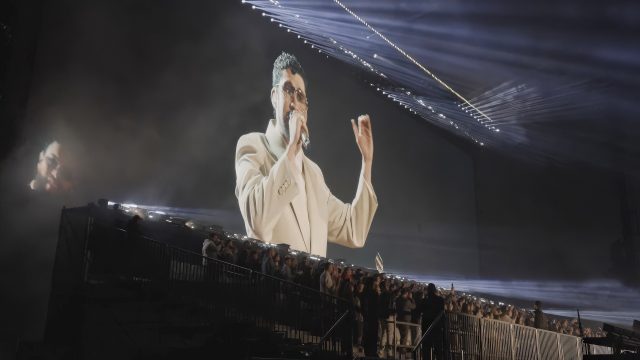
INFiLED’s Black Widow AMT at Bad Bunny’s world tour

That is the problem Black Widow AMT was built against. Not “make a brighter panel.” Make one touring ecosystem that removes the reason to own three.

The engineering falls into five areas:

  1. One ecosystem instead of three inventories
  2. Resolution that changes without changing the screen
  3. Builds that survive the outdoor brief
  4. On-camera performance that holds up under IMAG
  5. Logistics designed around the truck, not the warehouse

1. One ecosystem instead of three inventories

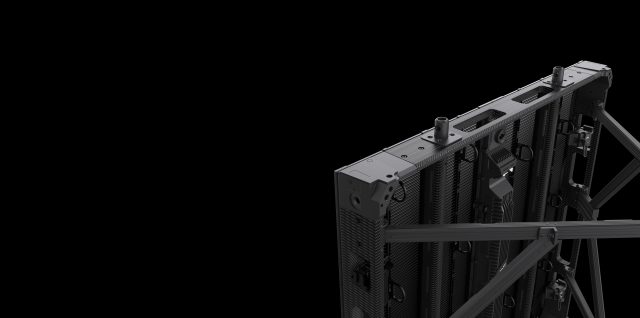
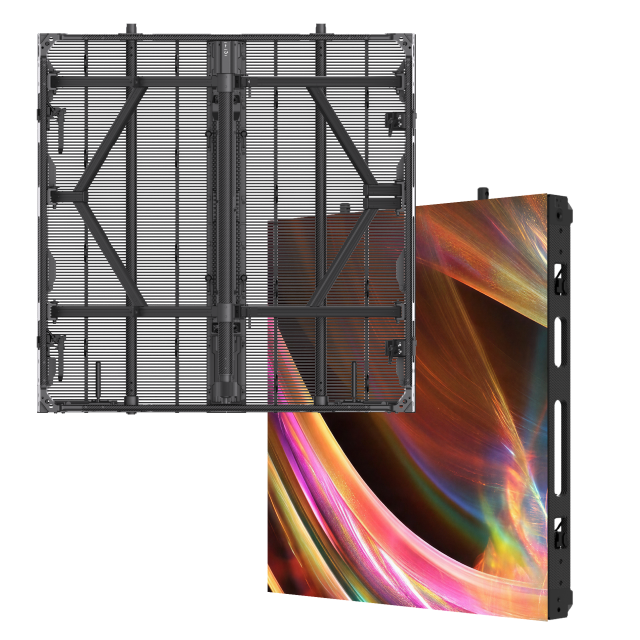
Black Widow AMT covers solid at 3.9 mm and 4.6 mm, transparent mesh at 7.8 mm with 51% transparency, and load-bearing LED floor and deck — all within one product family, on one set of frames, one power distribution architecture, and one rigging method.

The commercial consequence matters more than the specification. A single inventory can be pointed at every brief that arrives, which means the utilisation curve flattens: the mesh stock is not idle through the arena season, and the solid stock is not idle through festival season, because it is the same stock. Fewer SKUs also means fewer part numbers in the spares cage, one crew training path rather than three, and one set of structural documentation to hand to the venue.

And when the design changes six weeks out, the answer stops being a sub-hire.

Infiled

Black Widow AMT, a touring LED display system featuring dynamic resolution and a transparent display design.

2. Resolution that changes without changing the screen

This is the part that tends to stop people mid-conversation. Black Widow AMT switches between 3.9 mm and 7.8 mm in software — same frames, same power distribution, no module swaps, no re-rig.

Conventionally, changing pixel pitch means changing the physical product: a different panel, a different truck load, a different build. Dynamic Resolution decouples the two. The same wall that ran fine-pitch content for a corporate keynote on Tuesday runs as a coarser, more open canvas on Thursday, and the crew changes a setting rather than the screen.

For a rental operation, that is a utilisation multiplier applied to inventory that has already been bought. For a designer, it means the resolution question moves out of the procurement conversation and back into the creative one, where it belongs.

3. Builds that survive the outdoor brief

Outdoor touring is where specifications get tested by a structural engineer who has no interest in the marketing. Black Widow AMT is rated for builds to 26 m and wind loading to 20 m/s, with an optional wind brace system, IP65 protection front and rear, and UL94 fire certification.

The locking structure does the practical work: side hasp locks and top positioning columns mean cabinets align and lock without the fine adjustment that eats build time on a large wall. Rear IP65 matters more than it sounds — a great deal of touring product is protected on the face and vulnerable behind, which is exactly the wrong way round for a build that gets rained on from the back of an open-sided stage.

The same ecosystem is configurable for curves, corner transitions and load-bearing floor and deck. Creative geometry stops being a reason to bring in a second product.

Infiled

4. On-camera performance that holds up under IMAG

Mesh product has historically been the weak point of any camera plan. Coarse pitch, low refresh and unstable greyscale produce banding and flicker that a broadcast director notices immediately, and the usual fix is to keep the mesh out of shot — which quietly cancels the reason it was specified in the first place.

Black Widow AMT is built to stay in shot: JetBlack LEDs for contrast, true 16-bit processing, refresh up to 7,680 Hz, and full compatibility with Brompton processing. The point is not any one of those numbers. It is that the mesh and the solid product within the same build behave consistently enough on camera to be cut between.

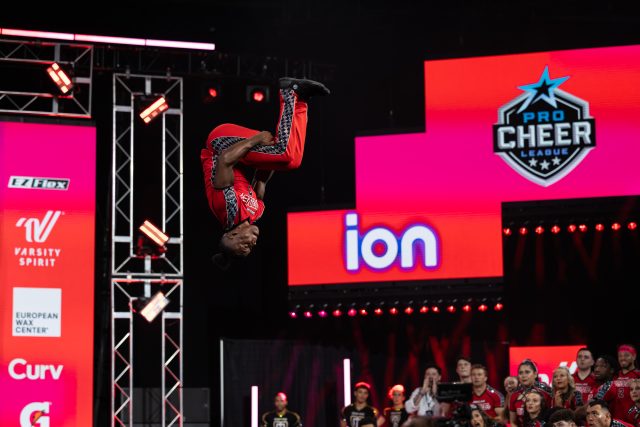
In this case study, through our collaboration with Varsity Spirit and UpLight Technologies, our Black Widow AMT Series was selected as the visual anchor of the show. A 12.2-meter-wide by 4.9-meter-tall upstage LED wall created a bold broadcast backdrop, delivering live camera feeds and replay content for the U.S. national television broadcast on ION Television.

Infiled

INFiLED’s Black Widow AMT supports the Pro Cheer League | Photo © Pro Cheer League

5. Logistics designed around the truck, not the warehouse

Touring economics are measured in truck space and crew hours, and both are consumed by the same thing: handling. Black Widow AMT uses integrated 10-in-1 touring dollies that double as prep, protection and pack — panels stay in their transport case through the workflow rather than being handled in and out of it.

Underneath, the carbon fibre frame carries full LED encapsulation and integrated collision protection, and the panels are designed to be climbed on during build. That last detail is not a marketing line. Crews climb screens whether or not the product was designed for it, and the damage bill shows up two tours later.

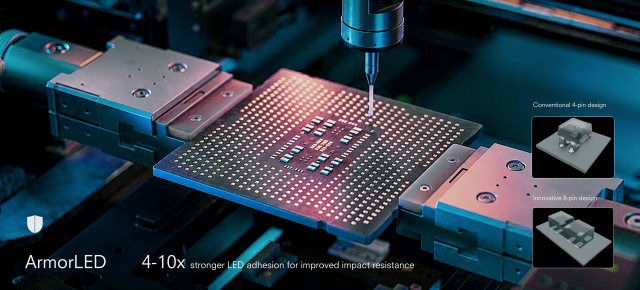
Which is where ArmorLED does its work. It combines triple LED reinforcement techniques, 8-pin LEDs, an Enhanced-Pad design and advanced GOE packaging to increase LED adhesion strength by 4–10×. In a fixed installation, adhesion strength is close to academic. On a product that is built, struck and trucked forty times a season, it is the difference between a panel that stays in the rental fleet for five years and one that becomes a spares donor in three.

The question worth asking before the next purchase

Not “which panel is best,” but: how many separate systems does our inventory need to own in order to say yes to every brief?

If the answer is three, that number is a cost — carried in capital, in warehouse space, in spares, in training, and in the jobs sub-hired out at someone else’s margin. A hybrid ecosystem does not make that cost smaller. It removes the reason for it.

Related reading:

User registration
Join us to download our content. It only takes a moment!

    I have read and accept the privacy policy

    This site is protected by reCAPTCHA and Google.

    It looks like you are visiting the website from
    Select your region: