Confirm

The Backdrop Nobody’s Supposed to Look At: LED Walls for Broadcast Sets and Content Studios

01.08.2026

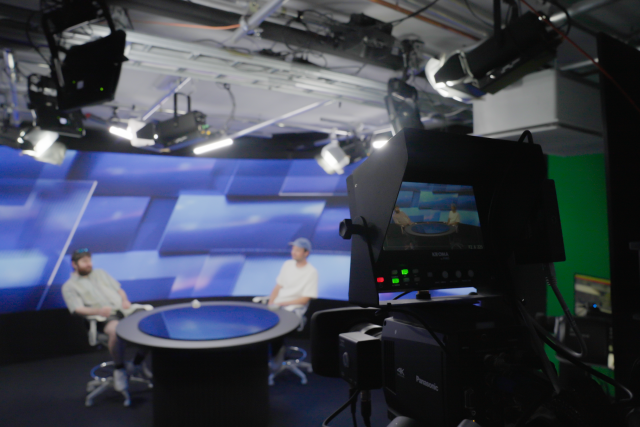
A set designer choosing an LED wall for a news set, a podcast studio, or a corporate video backdrop is not solving the same problem as an engineer speccing a control room. The wall is not the subject of the shot. It is the thing sitting behind the subject, and its entire job is to behave predictably under whatever camera, lighting rig, and lens combination that day’s shoot happens to use. A panel that looks perfect on a spec sheet can still band, flicker, or show a visible seam the moment it is framed behind a presenter, and that gap between paper specs and camera behavior is where most backdrop decisions go wrong.

The instinct is to shop by brightness or resolution, because those numbers are easy to compare. For a background wall, they are rarely the numbers that determine whether a shoot day goes smoothly. What matters more is how the panel holds color and brightness across a shift, how its refresh rate interacts with a camera’s shutter, and how quickly it can be serviced without blowing a production schedule. This piece is about that second set of specs, the ones that show up in dailies rather than on a data sheet.
Why a Backdrop Is a Different Design Problem Than a Video Wall

Most video wall content is judged by the eye in real time. Broadcast backdrop content is judged by a camera sensor, then re-judged by a colorist, then judged again by whoever is watching the final edit. That extra layer of translation is why camera-facing LED walls need to be evaluated differently than a lobby display or a digital signage panel.

Two properties matter most in that translation. Color and brightness stability determine whether a wall looks the same in take one as it does in take twenty, which matters enormously for multi-hour shoots and multi-day productions using the same set.

HDR-capable image quality, delivered through technology like HDR10, matters because modern broadcast cameras and post-production pipelines increasingly work in a wider dynamic range than older SDR panels were built to support, and a backdrop that cannot keep up becomes the bottleneck in an otherwise HDR-capable production chain.


Infiled

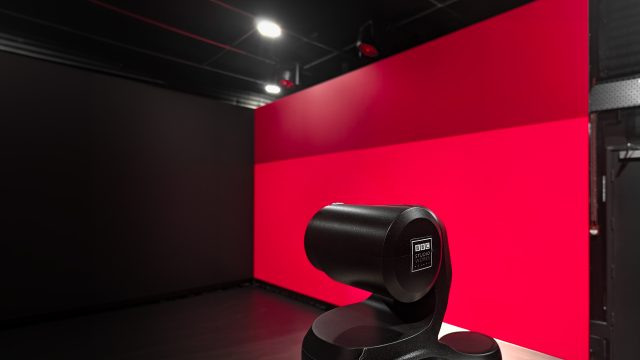
INFiLED’s DBmk2 LED backdrop powers BBC TV studio.

What Actually Shows Up on a Shoot Day

Refresh rate is the spec that most directly determines whether a wall is usable behind a camera at all.

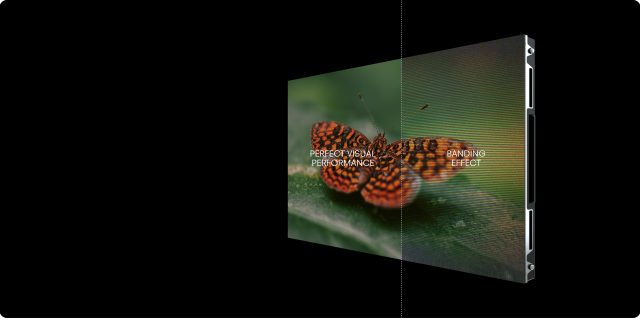
Camera shutters and LED panels operate on independent timing, and when a panel’s refresh rate is too low relative to a camera’s shutter speed, the result is visible banding or flicker in footage that looks completely fine to the naked eye on set.

Panels capable of refresh rates up into the thousands of hertz, some now rated as high as 7,680Hz, give a production far more headroom to shoot at whatever shutter angle a director of photography wants, rather than forcing the crew to compromise camera settings around the display.


Infiled

High Refresh up to 7,680Hz provides camera-ready visuals with nanosecond response playback.

Physical build matters just as much once a wall becomes part of a set rather than a freestanding display. Studio builds are often tight on space, with lighting grids, camera positions, and set flats competing for the same square footage, so an ultra-thin display profile makes a real difference in how a backdrop wall gets framed into a set without eating into blocking space.

Electromagnetic compliance, such as EMC Class B certification, also becomes more relevant on a broadcast set than in most other environments, since a studio is full of sensitive audio and RF equipment that a poorly shielded display can interfere with.

A closer technical breakdown of how flicker and moire actually originate on camera is covered in a companion piece on eliminating flicker and moire in broadcast LED walls, and an industry guide to LED walls in virtual production covers the underlying resolution, brightness, and refresh requirements in more depth.


Infiled

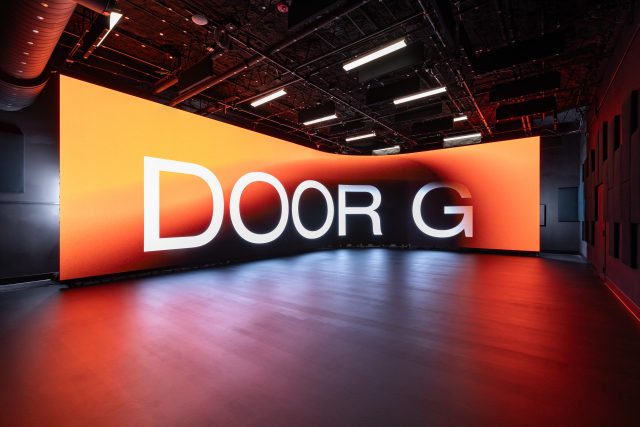
Door G Virtual Production studio.

Why Serviceability Changes the Production Math

A control room can usually schedule maintenance around a shift change. A production studio often cannot, because a set is booked, talent is on the clock, and a crew is paying for the day whether or not the backdrop is working. That difference makes front-service access a genuinely different kind of specification for a studio than for most other verticals. A panel that can be swapped from the front, without pulling the wall away from a set flat or disturbing lighting cues built around it, keeps a dead pixel or module failure from turning into a lost shoot day.

This is also where cost conversations tend to get incomplete. A studio comparing wall options purely on purchase price is missing the larger cost of downtime on a day when a crew, talent, and rented space are all being paid for regardless of whether the wall is working.

That broader accounting is covered in more detail in a companion piece on cost considerations for broadcast LED walls, and INFiLED’s experience supplying displays into studio environments has consistently shown that the wall’s service model ends up mattering more to a production team than almost any other spec once the system is actually in daily use.


Infiled

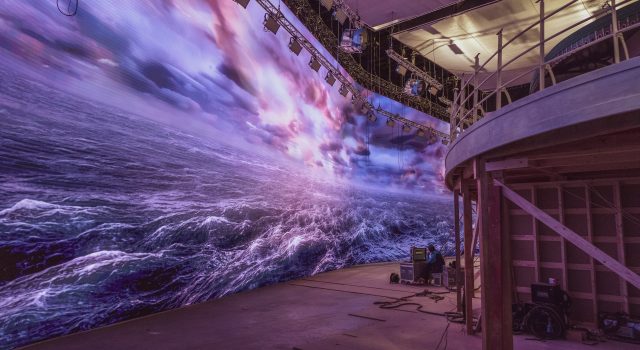
Poor Things production in the studio

Set Design and Virtual Production Are Related but Different Briefs

It is worth separating this from the virtual production conversation, since the two get conflated often.

A virtual production volume is built to display tracked, camera-reactive background environments and is judged on geometry, latency, and tracking integration. A studio backdrop wall, by contrast, is usually running branded content, graphics, or a static or slow-moving background, and is judged on how invisible its seams and mechanics are rather than on real-time rendering performance.

A wall built primarily for the backdrop use case, like the backdrop DBmk2 from the STUDIO Series, can be a strong fit for both news and content studio sets without needing the full virtual production toolchain, and a broader look at what studios actually need from broadcast and virtual production walls lays out where those two briefs diverge.


Infiled

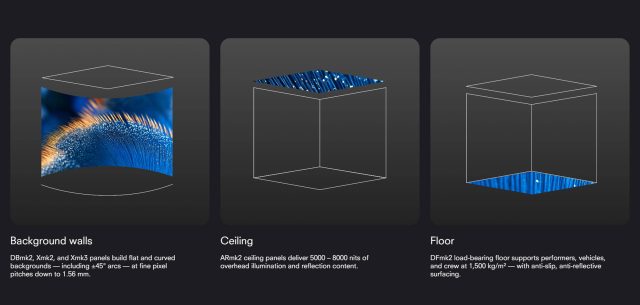
STUDIO Series, the complete LED ecosystem for virtual production and broadcast studio.

Specifying for the Camera, Not the Room

The short version is that a broadcast backdrop should be specified for the camera that will be pointed at it, not for the room it sits in. Color stability across a shoot, a refresh rate with real headroom above the camera’s shutter, a thin enough profile to disappear into a set build, and a service model that survives a live production schedule all matter more than the brightness number that tends to dominate the conversation. Getting those right is what keeps a wall doing its actual job, which is staying out of the story. It is also the reasoning Infiled has built into panels meant for studio use, where the measure of success is a backdrop nobody in the audience ever thinks about.

User registration
Join us to download our content. It only takes a moment!

    I have read and accept the privacy policy

    This site is protected by reCAPTCHA and Google.

    It looks like you are visiting the website from
    Select your region: